
Last updated November 18, 2026
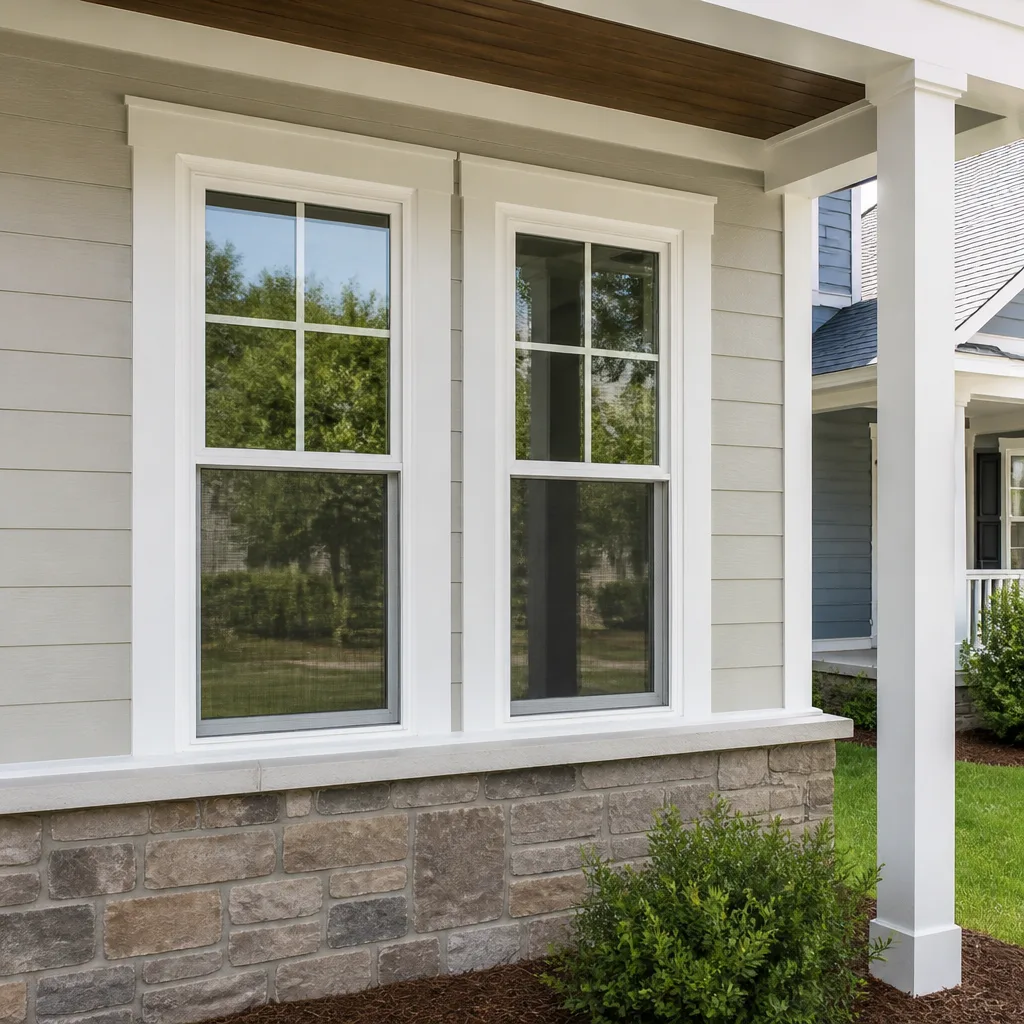 Single hung
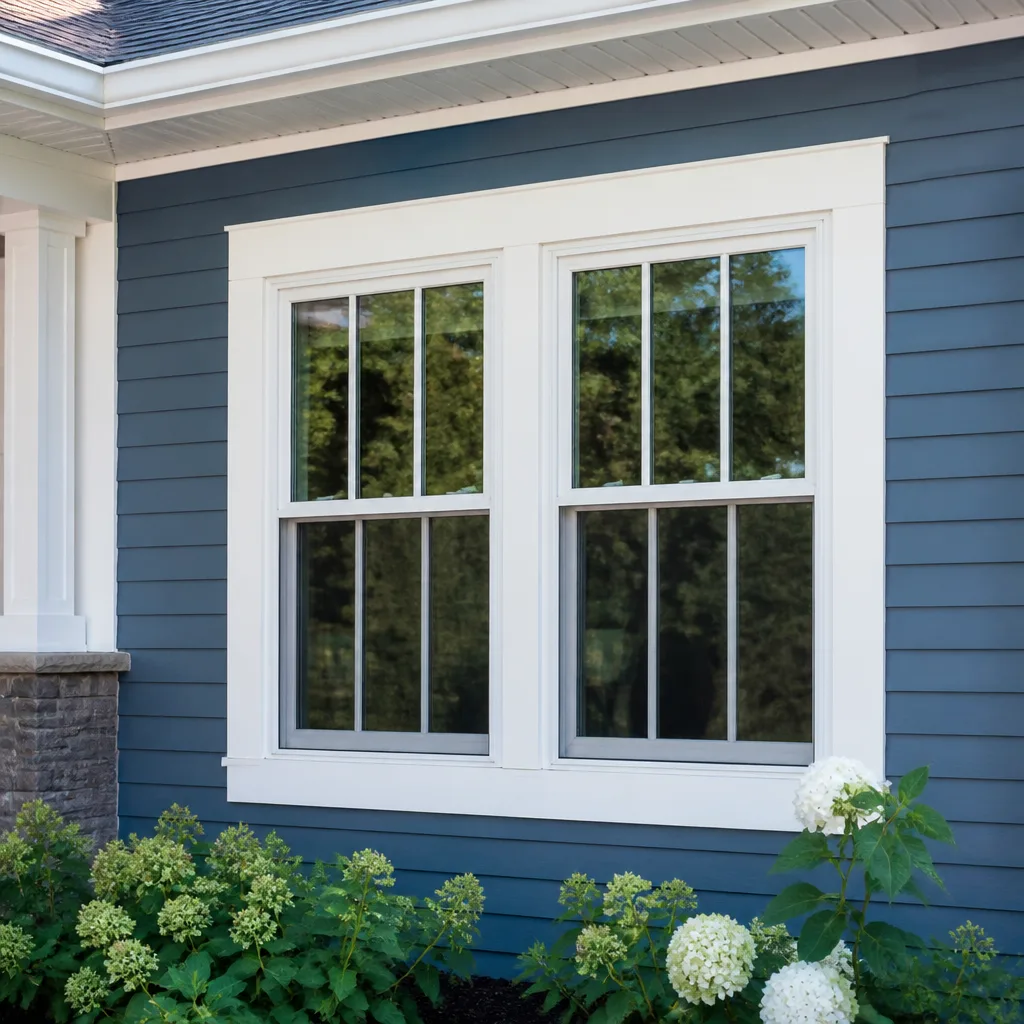 Double hung
 Horizontal roller
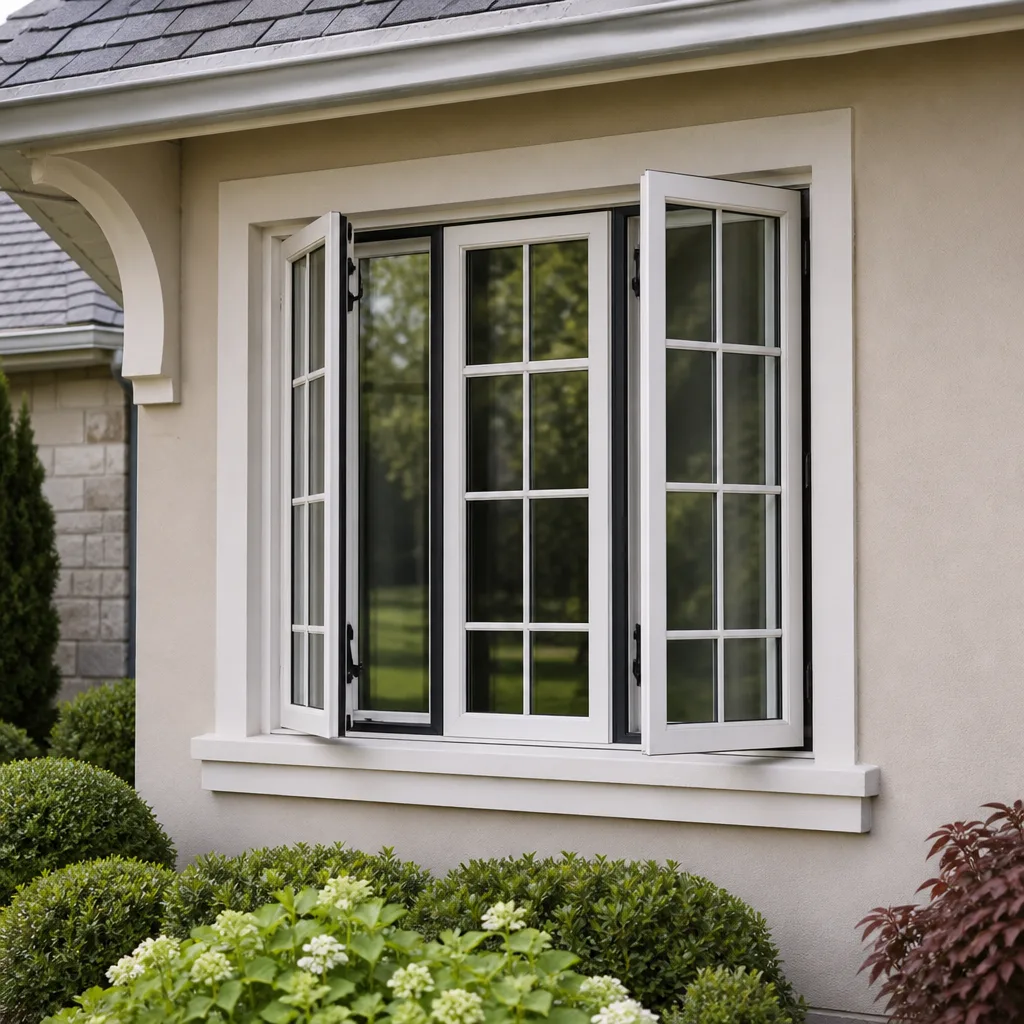 Casement
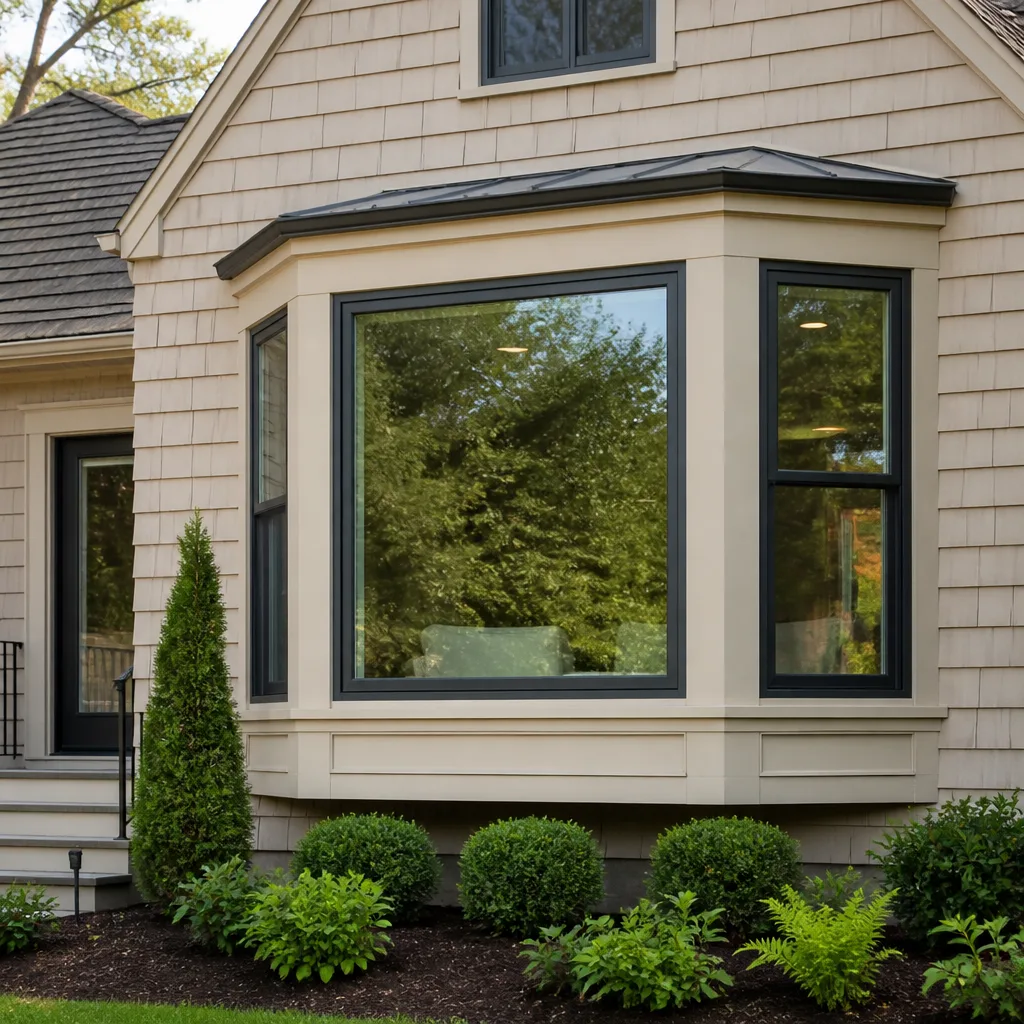 Bay & bow
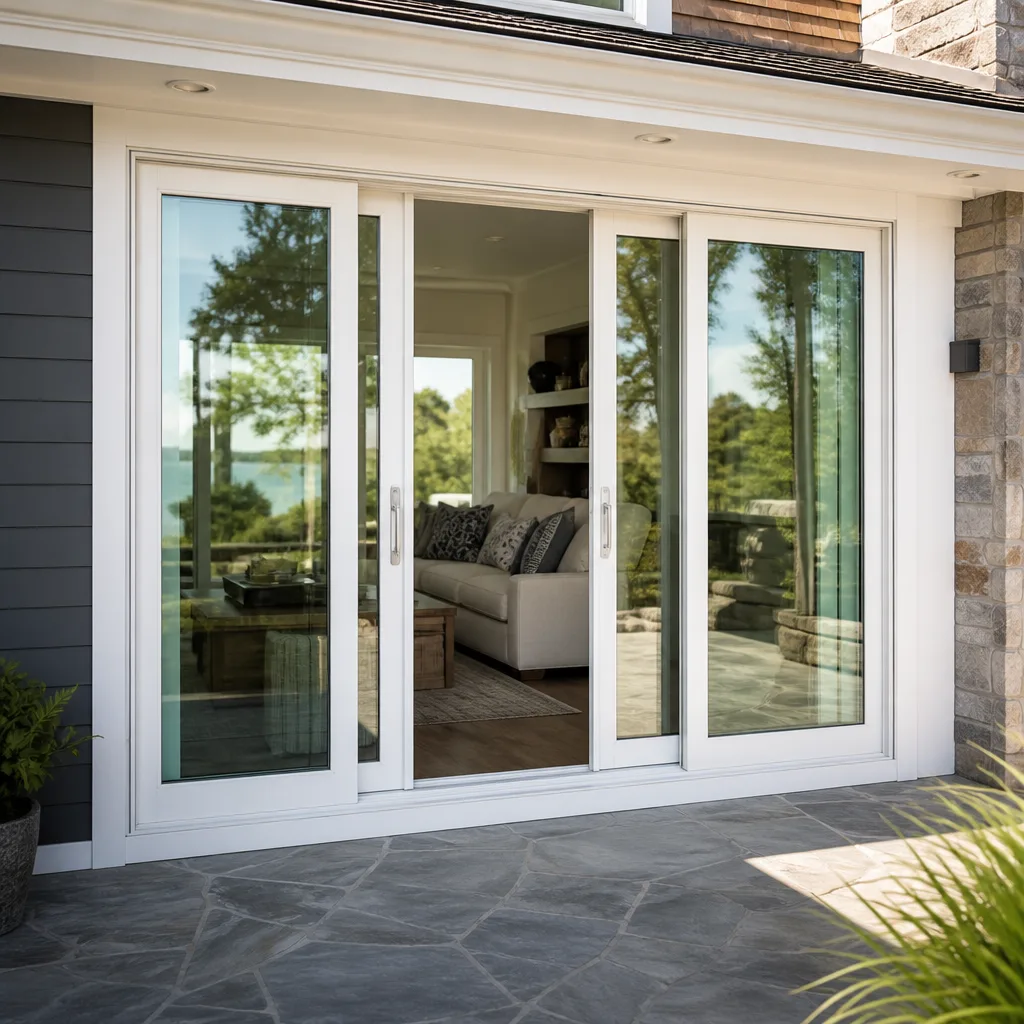 Sliding glass doors
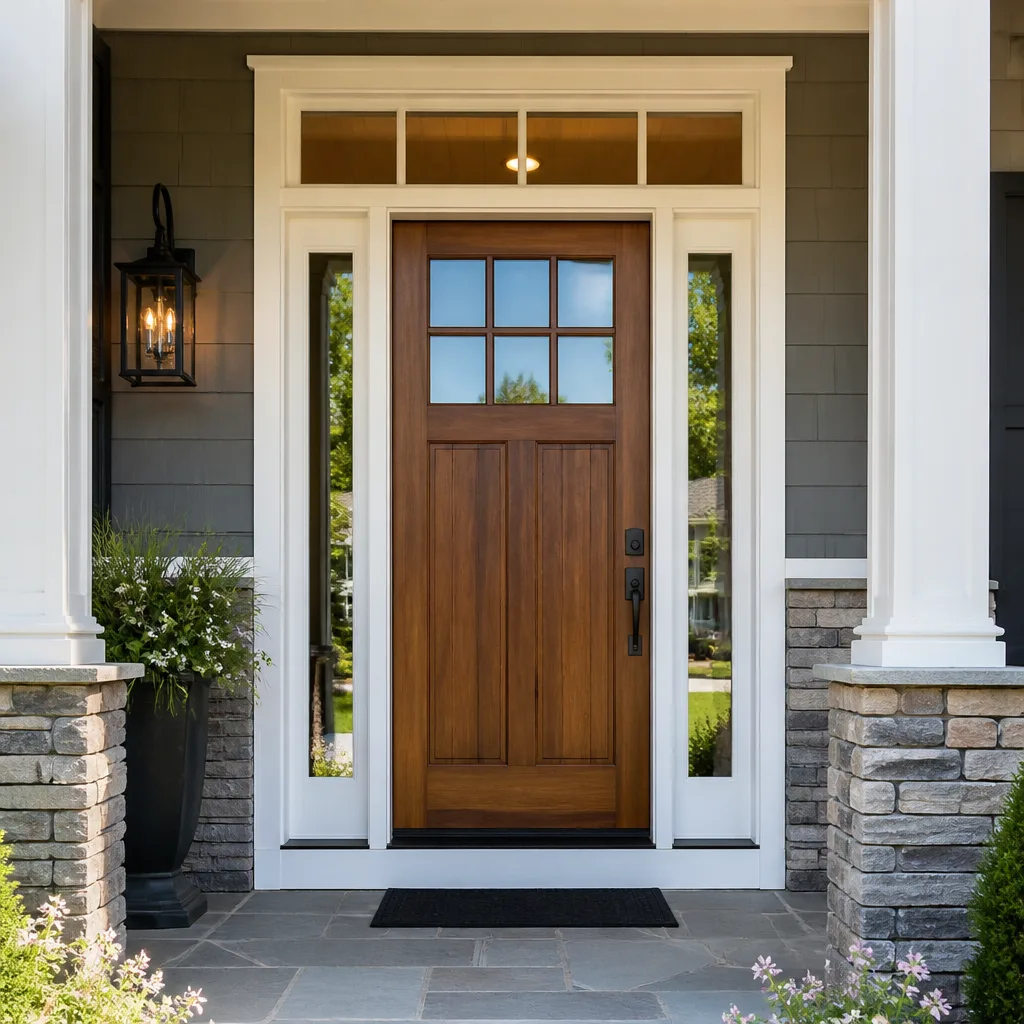 Entry doors
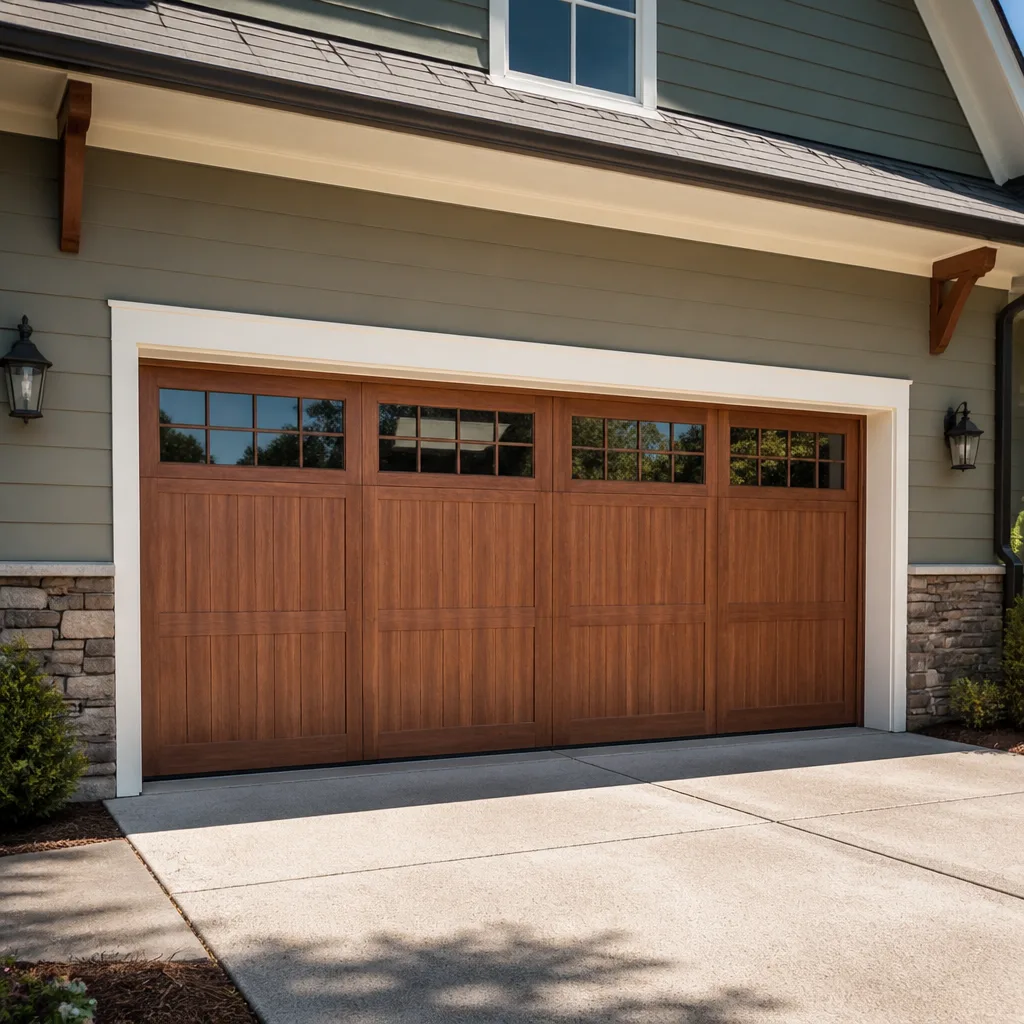 Impact garage doors
 PGT
 CGI
Free in-home measure and quote - PGT, CGI and CWS impact lines compared on your actual openings, style by style
Get your free estimateWindow Installation Maintenance Checklist for Henderson Homeowners
Silicone sealant on a Henderson window that looked perfect at installation can be visibly cracked and air-permeable within 18 months if the wrong formulation was used. Most homeowners find out in July, when the electric bill jumps and a hairline gap starts whistling on the west side of the house. The national maintenance checklists floating around the internet were written for humid climates, and they miss nearly every failure point a Henderson house actually develops. What follows is the inspection sequence a glazier runs after a Nevada summer: sealant under UV load, weep holes after monsoon debris, frame expansion gaps in desert heat, and hardware that fights alkaline dust.
Quick Answer
Inspect your Henderson windows twice a year, not once: once in late spring before the worst UV months and once in October after monsoon season. Check sealant for cracking and adhesion loss, clear weep holes of dust and debris, verify frame expansion gaps, and lubricate casement and slider hardware every six months. Most window failures in Henderson trace back to sun exposure and dust, not age, and most are preventable when caught early.
Styles & brands we work with
- Single hung
- Double hung
- Horizontal roller
- Casement
- Bay & bow
- Sliding glass doors
- Entry doors
- Impact garage doors
- PGT
- CGI
Table of Contents
- Why Generic Maintenance Checklists Fail Henderson Homes
- Sealant and Caulk Inspection: What UV Exposure Does to Henderson Windows
- Testing Weep Hole Function After a Henderson Rain Event
- Frame Expansion Gap Verification for Vinyl and Aluminum
- Hardware Lubrication and the Alkaline Dust Problem
- The Post-Monsoon Dust Season Checklist
- Glass, Screens, and Weatherstripping: The Quick Pass
- Repair or Replace? Reading the Signals at Year Fifteen
Why Generic Maintenance Checklists Fail Henderson Homes
Most window maintenance advice assumes four seasons with moderate humidity. Henderson runs the opposite: roughly 300 days of sun a year, summer highs that regularly push past 105 degrees, and a winter that brings hard freezes for a few weeks and little else. That climate produces failures the national guides rarely mention. Sealant degrades from ultraviolet exposure before it degrades from moisture. Dust, not rain, is the primary enemy of moving parts. And a window that gets through the summer without a problem can still fail the first cold snap when the frame contracts.
We’ve seen the pattern repeat across Henderson neighborhoods for long enough to know the local causes:
- UV first, water second. In wetter climates, caulk fails from the inside out. Here, the sun bakes it from the outside and it cracks on the surface first.
- Dust migrates into tracks. Alkaline desert dust settles into slider channels and casement hinges and mixes with the lubricant into a grinding paste.
- Heat drives expansion. Vinyl and aluminum frames move more in Southern Nevada than a manufacturer’s general spec assumes.
- Monsoon season deposits debris. The rain that does arrive comes hard and fast and washes grit into drainage paths that have to keep working.
- Dry air hides leaks. A window that would show water staining in a humid climate can leak and dry out before you ever see damage.
This is why the true inspection sequence starts with sun and dust, not a calendar. For a homeowner deciding whether the existing units are worth maintaining or replacing, window installation in Henderson covers what a properly set unit actually looks like on day one.
Sealant and Caulk Inspection: What UV Exposure Does to Henderson Windows
Sealant is the single most important maintenance item on a Henderson window, and it’s the one most homeowners check last. Southern Nevada’s UV index sits in the very high to extreme range from roughly April through September. A cheap painter’s caulk or a low-grade silicone applied at installation will chalk, crack, and pull away from the frame in 12 to 18 months under that load. A UV-stable exterior sealant rated for direct sun exposure will last years longer. The formulation matters more than the annual timeline any generic checklist gives you.
Here is how to actually read the sealant, in order:
- Run a finger along the exterior bead. Healthy sealant feels flexible and slightly tacky. If it crumbles or flakes off on your finger, it’s already failed.
- Look for surface cracking. Fine spiderweb cracks across the bead are the first sign of UV breakdown. Deep cracks that go through to the frame mean water is getting behind it.
- Check adhesion at the corners. Sealant pulls away from framing at corners and miter joints first because that’s where movement concentrates.
- Press the bead gently. If it’s hard and brittle rather than rubbery, it has cured out and is no longer sealing.
- Inspect on the south and west sides first. Those faces take the most direct sun in Henderson and fail earliest.
Look at the sealant on any window facing south or west in July and you’ll know within twenty seconds whether the installer used the right product. Hardware store caulk isn’t the standard. For a replacement job, the exterior sealant should be part of window replacement in Henderson, not an upsell added later.
Testing Weep Hole Function After a Henderson Rain Event
Weep holes are the small drainage openings at the bottom of a window frame that let water out and air in. In most of the country they stay clear because rain rinses them regularly. In Henderson, they sit dry for months, fill with windblown dust and grit, and then get tested all at once by a monsoon storm that drops an inch of rain in an hour. A clogged weep hole turns a minor rain event into a window that holds water against the sill and slowly rots the framing behind it.
Test them after any significant rain, and at least once in early October when monsoon season winds down:
- Locate every hole along the bottom exterior sill or the lower track. There are usually two to four per window.
- Clear the surface with a soft brush or a can of compressed air. Don’t jam a screwdriver in; you’ll damage the frame.
- Run a straw test. Gently blow a little air through, or trickle a cup of water and watch. Water should drain out the front, not pool and sit.
- Check interior sills for water stains. A brown ring or soft spot at the bottom of the interior frame means the weep path has been blocked for a while.
- Clear the debris tray under sliding windows if your unit has one. That’s where fine dust collects before it reaches the weep hole.
Henderson’s rain isn’t frequent, but it’s heavy when it comes, which is why blocked weep holes do more damage here than poorly installed drainage would in a wetter climate. Clear them and they’ll handle a hard monsoon without a problem. Skip them and the water finds the wall.
Frame Expansion Gap Verification for Vinyl and Aluminum
Every window frame needs room to expand and contract, and in desert heat that room matters more than a generic spec assumes. The expansion gap is the small space between the frame and the rough opening, filled with backer rod and sealant rather than shimmed solid. Too tight a gap and the frame has nowhere to go when the afternoon sun heats it, which forces the glass against the frame and creates stress cracks. Too loose and the sealant has to bridge a gap it can’t handle.
Here’s the tolerance range we work to:
- Vinyl frames: roughly 1/4 inch to 3/8 inch of expansion gap on the sides and top, depending on frame size.
- Aluminum frames: a tighter range, closer to 1/4 inch, since aluminum moves less but stiffens faster in the cold.
- Mixed material units: follow the manufacturer’s spec exactly. When a distributor like CGI or ES Windows publishes a gap tolerance for a specific line, that number wins over a general rule.
You can spot a bad gap without opening a wall. Look for cracking at the corners of the interior trim, a window that binds in summer and frees up in winter, or glass that has developed a fine crack near the corner. All three point to the frame pushing against the opening because it has nowhere to move. A job done properly from the start, made with a manufacturer line whose gap spec is written down, doesn’t show these symptoms by year five. If yours does, that’s the moment to call for an inspection rather than wait for a full failure. You can read more about what a properly set frame should look like at the TruePane Windows & Doors Henderson home page.
Hardware Lubrication and the Alkaline Dust Problem
Sliding and casement window hardware needs lubrication every six months in Henderson. Not once a year. Desert dust is alkaline and fine, and it settles into every moving part. Casement crank mechanisms, slider tracks, and lock points all collect it. When that dust mixes with old lubricant, it turns into a grinding paste that wears metal surfaces faster than a decade of normal use would.
The lubrication schedule that works:
- Clean first, lubricate second. Wipe the tracks and hinges with a dry rag to remove dust and old grease. A solvent wipe is fine on metal, not on rubber seals.
- Use the right product. A dry silicone spray or a light synthetic grease works better than oil in a dusty climate. Oil attracts and holds dust. Silicone repels it.
- Lubricate lock points and the casement crank arm. A few drops at the pivot points keeps them moving smoothly through August.
- Work the hardware. Open and close the window a few times after lubricating so the product reaches the full travel.
- Repeat every six months – once in spring before the heat, once in fall after monsoon dust.
Hardware that starts to feel stiff is telling you it’s overdue. A casement window that takes two hands to crank shut or a slider that squeals on the track is a call for lubrication, not a call for a replacement. If you wait, the friction wears the mechanism down and you’re buying new hardware instead of a $6 can of silicone spray. For sliding and patio doors, the same logic applies; the door installation in Henderson page covers the track and hardware specs that hold up in the desert.
The Post-Monsoon Dust Season Checklist
Monsoon season in Southern Nevada runs roughly July through September, and it deposits dust and grit in places national maintenance guides never mention. After the rain passes, you have a short window to clear what the storm brought in before it settles and gets baked into tracks and sealant by the next heat cycle. Here’s the post-monsoon walkthrough:
- Clear screens of grit. Fine dust collects on screen mesh and blocks airflow. Rinse with a hose on low pressure and let dry.
- Inspect and clear weep holes after every major rain, as covered above.
- Wipe the interior and exterior tracks. The rain pushes dust into the lower sliders and window wells. Wipe them dry before it hardens.
- Check the sealant bead where the rain and wind may have opened a gap, particularly on the west and north faces where storm winds typically hit.
- Look for water intrusion on interior finishes. Any bubbling paint, soft drywall, or discoloration below a window is a sign moisture got in.
- Re-test hardware. Slides that were smooth in June may feel gritty in October. Clean and re-lube if needed.
Homeowners in Green Valley and Anthem, where the homes sit close to open desert and the wind picks up across open ground, tend to see more dust and debris reach the windows than homes with more windbreak. The checklist is the same, but those neighborhoods get the walkthrough a little sooner in the season.
Glass, Screens, and Weatherstripping: The Quick Pass
The glass and weatherstripping items are the fastest part of the maintenance pass, but they’re worth checking on the same schedule. Glass itself rarely needs much attention beyond cleaning, but the seals around it and the weatherstripping that keeps out air and dust do.
What to look for:
- Fogging between panes. Any cloudiness or moisture between the glass in a double-pane unit means the seal has failed. The window will still work, but it loses insulating value immediately.
- Weatherstripping flatness or tears. The strip that seals the operating window against the frame should still feel springy. If it’s flat or cracked, air and dust get through.
- Screen damage. Small tears grow. A quick patch extends a screen’s life; a full replacement is cheap.
- Glass cracks near the corner. Almost always a frame stress issue, not a random break.
- Condensation on the interior of the glass in winter. A little on a cold morning is normal. Consistent moisture across the pane suggests the window isn’t insulating properly.
If you’re seeing fog between the panes on more than one window, it’s worth having the units evaluated by a professional. Glass seal failure is not something to fix on a ladder with a tube of silicone.
Repair or Replace? Reading the Signals at Year Fifteen
Most Henderson windows hit a decision point around year fifteen to twenty, and the question is whether the maintenance still makes sense or whether you’re putting good money into failing units. The honest answer depends on which failure you’re looking at. A failed sealant bead is a maintenance issue. A failed glass seal is a repair, sometimes a replacement. A frame pushed out of alignment or a series of cracks near the corners is a replacement conversation.
Signs that point toward replacement:
- Fogged glass on more than two windows. The units are aging out at the same rate.
- Frame cracks at the corners. Usually a sign the gap tolerance was wrong from the start.
- A window that binds in summer and won’t close fully. The frame or the hardware has shifted beyond adjustment.
- Repeated leaking despite fresh sealant. Water is getting past something sealant can’t fix.
- Energy bills climbing year over year with no other explanation, which points to lost insulation value in aging glass.
A proper install on the front end, made with a side-by-side manufacturer quote for a line like CGI, CWS, or ECO Window Systems, is why replacement is a rare conversation on a window that isn’t fifteen or twenty years old. If you’re reading this and thinking the answer is now, that’s the call to make.
Common Mistakes to Avoid
- Using the wrong sealant and assuming it’s the same thing. A painter’s caulk on a west-facing Henderson window fails in under two summers. Exterior UV-stable sealant is the only product that holds in Southern Nevada sun.
- Following a once-a-year maintenance schedule. National checklists assume moderate UV and steady rain. In Henderson, biannual inspections are the floor. Twice a year or you’ll miss the seasonal failure windows.
- Skipping weep hole cleaning because it doesn’t rain much. The dry periods are exactly why weep holes clog. When the monsoon comes, they need to be open.
- Using oil-based lubricant on tracks. Oil attracts desert dust and turns into grinding paste. Dry silicone is the correct product here.
- Assuming a little fog between panes is normal. It isn’t. It’s a failed seal and it means the window has already lost its insulation value.
- Waiting for a leak before checking sealant. Dry air hides moisture intrusion. In Henderson, you’ll often find the leak after the damage, not during.
- Ignoring frame stress symptoms. Cracks near the corner or a window that binds in summer point to an expansion gap issue. Ignoring it turns a fixable problem into a full replacement.
See the difference
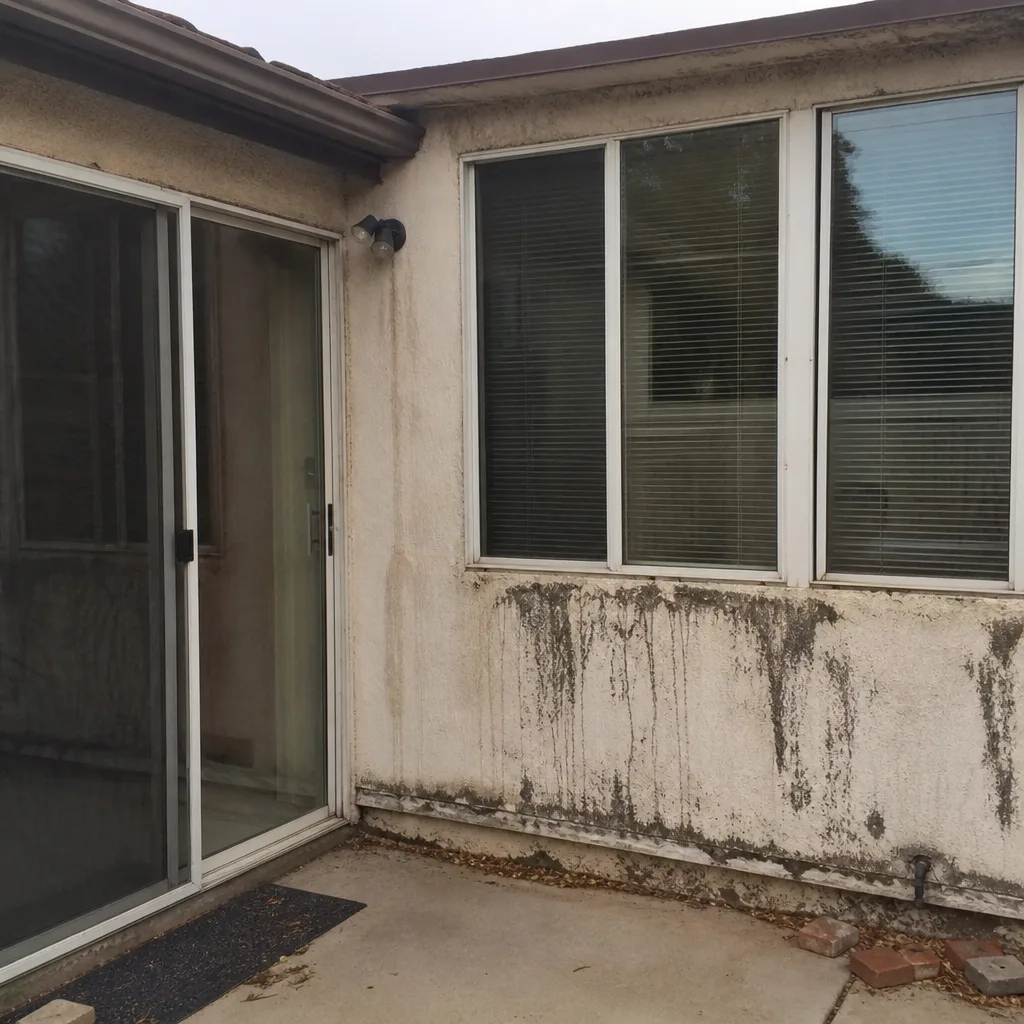 Before
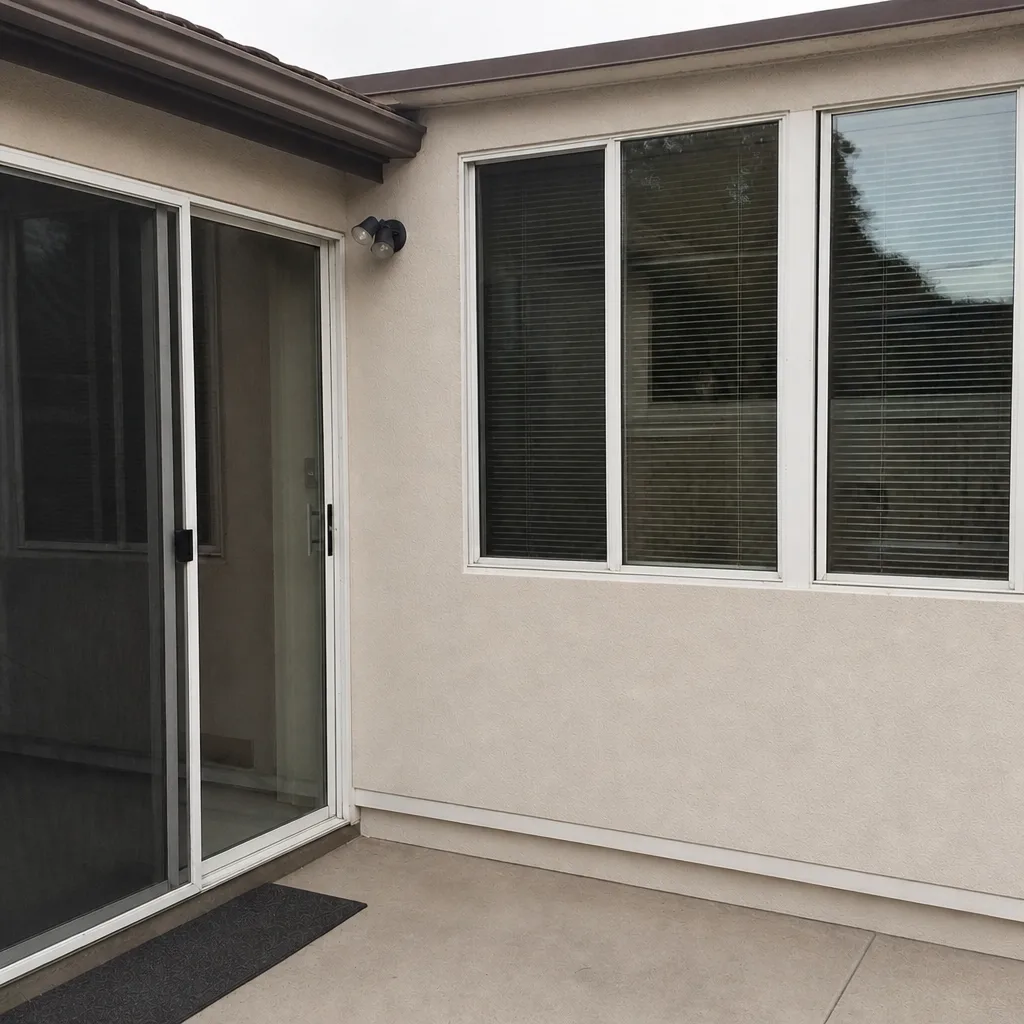 After
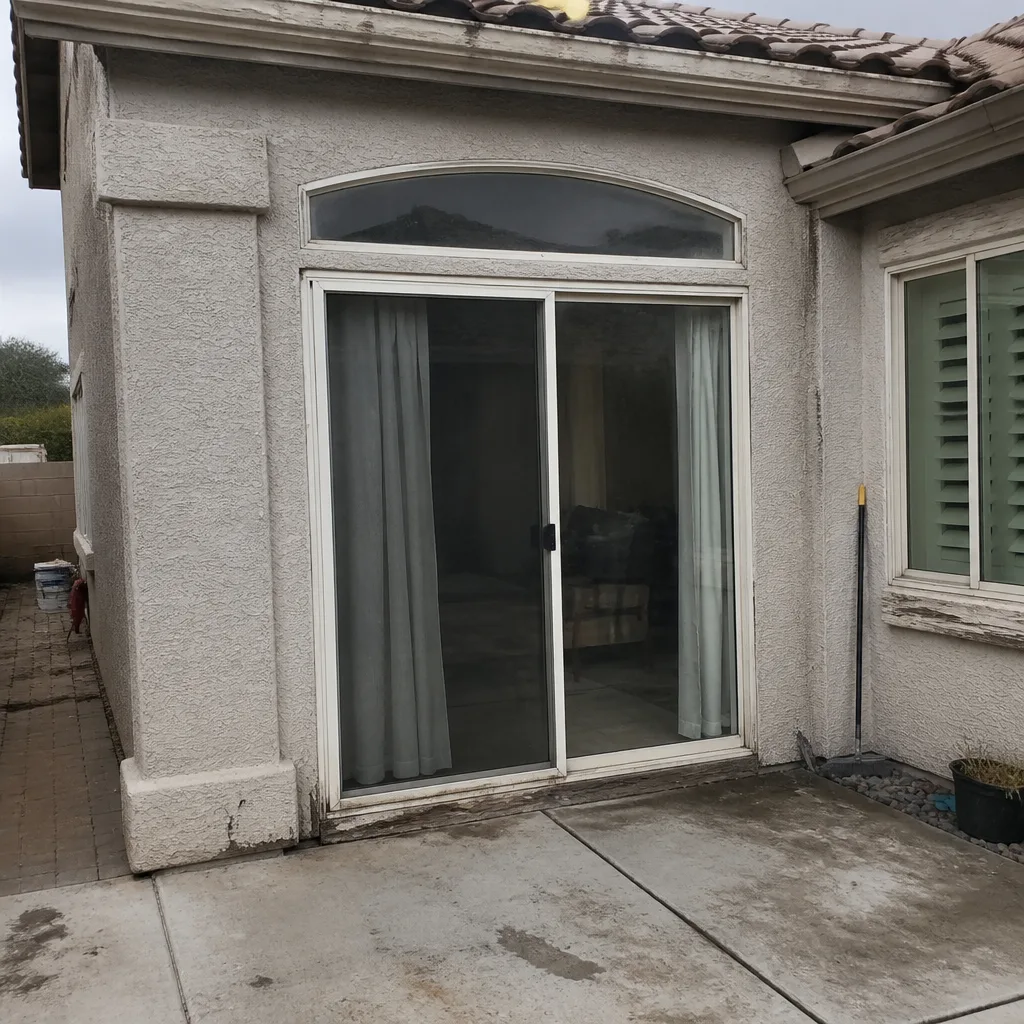 Before
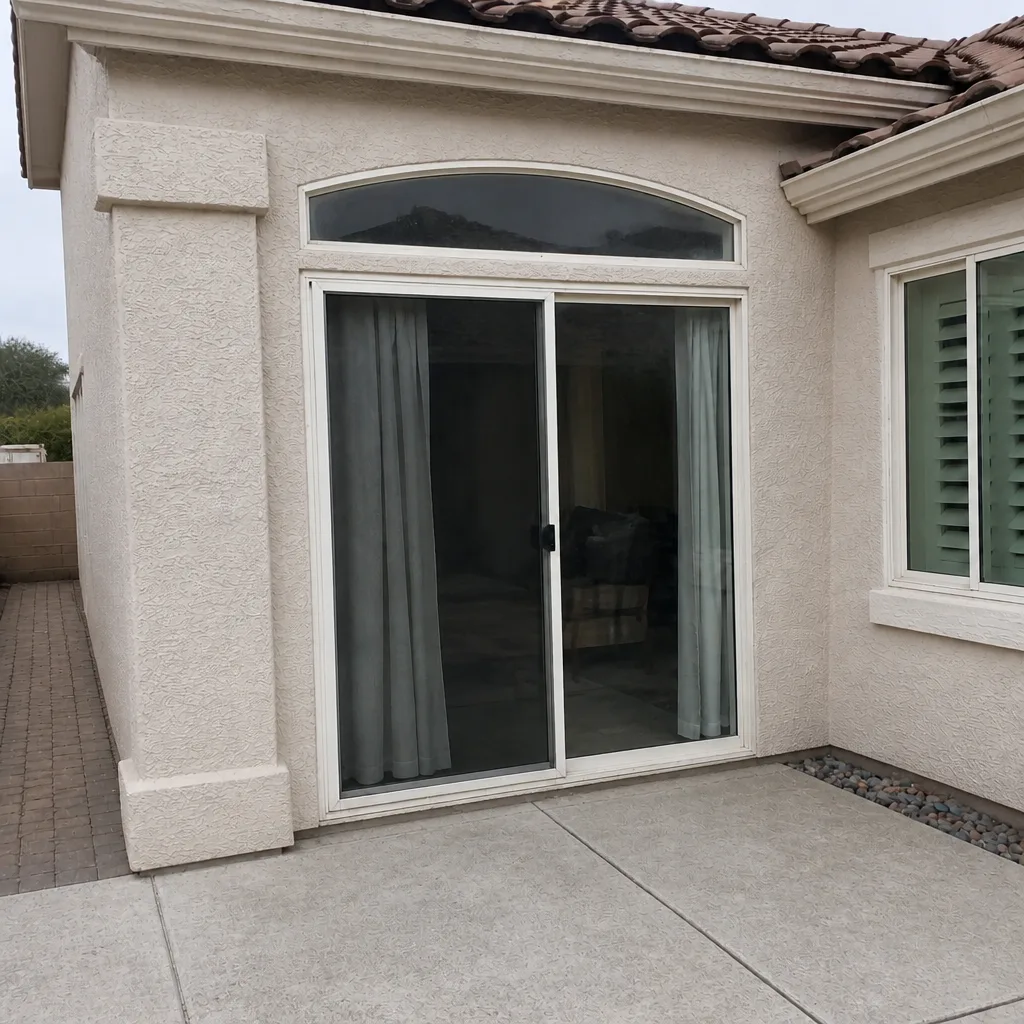 After
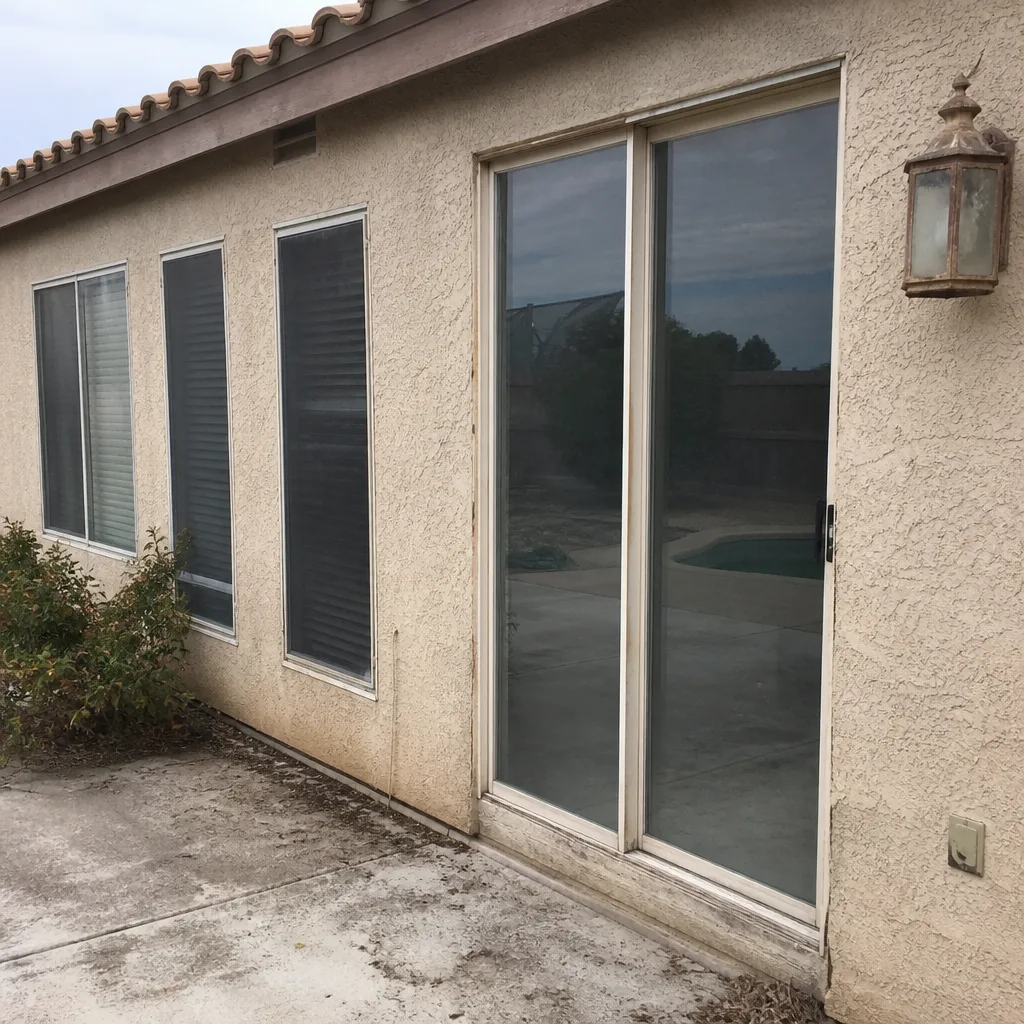 Before
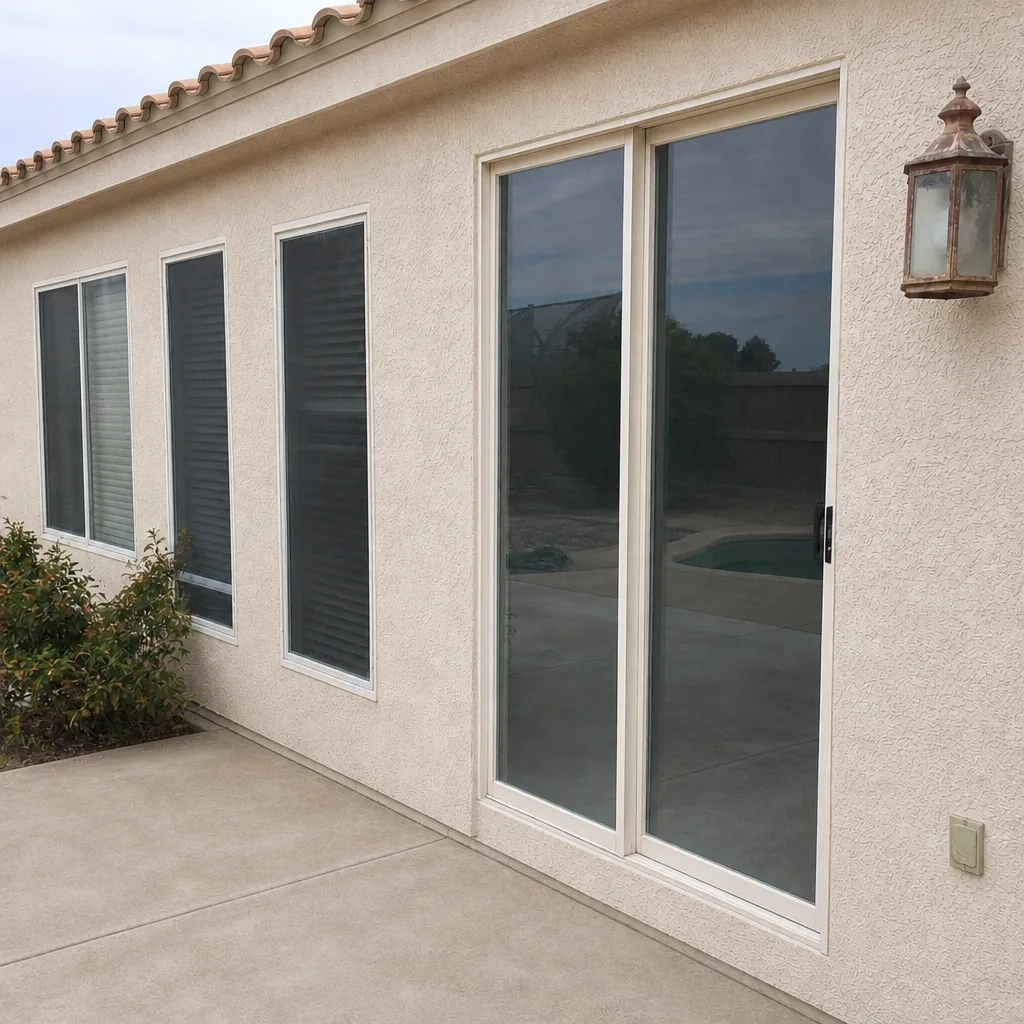 After
When to Call a Professional
Some maintenance belongs in your hands and some doesn’t. Call a professional when you find fogged glass on more than one window, cracks at the frame corners, water stains on the interior sill that keep returning after you’ve cleared the weep holes, a window that no longer closes fully, or sealant failure that goes down to bare frame rather than sitting on the surface. Working on glass at height, reseating a frame, or chasing a leak behind the wall is beyond a homeowner checklist. TruePane Windows & Doors Henderson offers free estimates in Henderson. Call (833) 842-6670.
Frequently Asked Questions
Twice a year – once in late spring and once in October after monsoon season. Southern Nevada’s UV load and desert dust mean annual checks are not enough. Homes facing west or south age faster and may need attention slightly sooner than that.
Because the wrong sealant was used. Desert UV degrades low-grade silicone and painter’s caulk within 12 to 18 months. Exterior UV-stable sealant holds for years. If yours is cracking every year, the product is the problem, not your technique. It’s worth calling (833) 842-6670 for an evaluation if you’re not sure which product is right.
It’s the space between the window frame and the rough opening that lets the frame expand and contract with heat. Vinyl frames typically need 1/4 to 3/8 inch, aluminum closer to 1/4 inch. You can’t measure it easily once the window is installed, but binding in summer, frame cracks near the corners, or trim that suddenly splits all point to a gap issue.
Yes, arguably more than in a wet climate. They sit dry for months, fill with dust and grit, and then get tested all at once by a monsoon storm. Clogged weep holes hold water against the frame and rot it slowly. Clear them after every significant rain.
Yes, the glass itself doesn’t change the maintenance schedule. Sealant, weep holes, weatherstripping, and hardware still need the same biannual attention. What impact-rated or energy-efficient glass does change is your energy bills and storm protection, not the maintenance needs of the frame. For details on the glass itself, see window installation in Henderson.
Sometimes. If the frame and hardware are sound and only the glass seal has failed, glass replacement is possible. If you’re seeing multiple failures at once, or the frame is showing stress signs, a full replacement is often the better use of the money. Call (833) 842-6670 to have it looked at – estimates are free.
The Bottom Line
Henderson windows fail from sun and dust before they fail from age, and the maintenance schedule that fits the desert is a twice-a-year inspection, not a once-a-year one. Check sealant for UV cracking, clear weep holes after every rain, verify expansion gaps by watching for binding and corner cracks, and lubricate casement and slider hardware every six months. Most of this is homeowner-level work. When the symptoms point to frame stress, failed glass seals, or a leaking window that won’t stay sealed, that’s the moment to call. The right fix early is always cheaper than the replacement later.
If it’s time to have any of this looked at, call (833) 842-6670 for a free estimate. TruePane Windows & Doors Henderson covers inspections, repairs, and full window replacement for homeowners across the Henderson area. Every job comes with a free estimate, upfront written pricing, and no surprise line items on the bill.
Written by the team at TruePane Windows & Doors Henderson.