
Last updated November 18, 2026
 Sliding glass doors
 Single hung
 Double hung
 Horizontal roller
 Casement
 Bay & bow
 Entry doors
 Impact garage doors
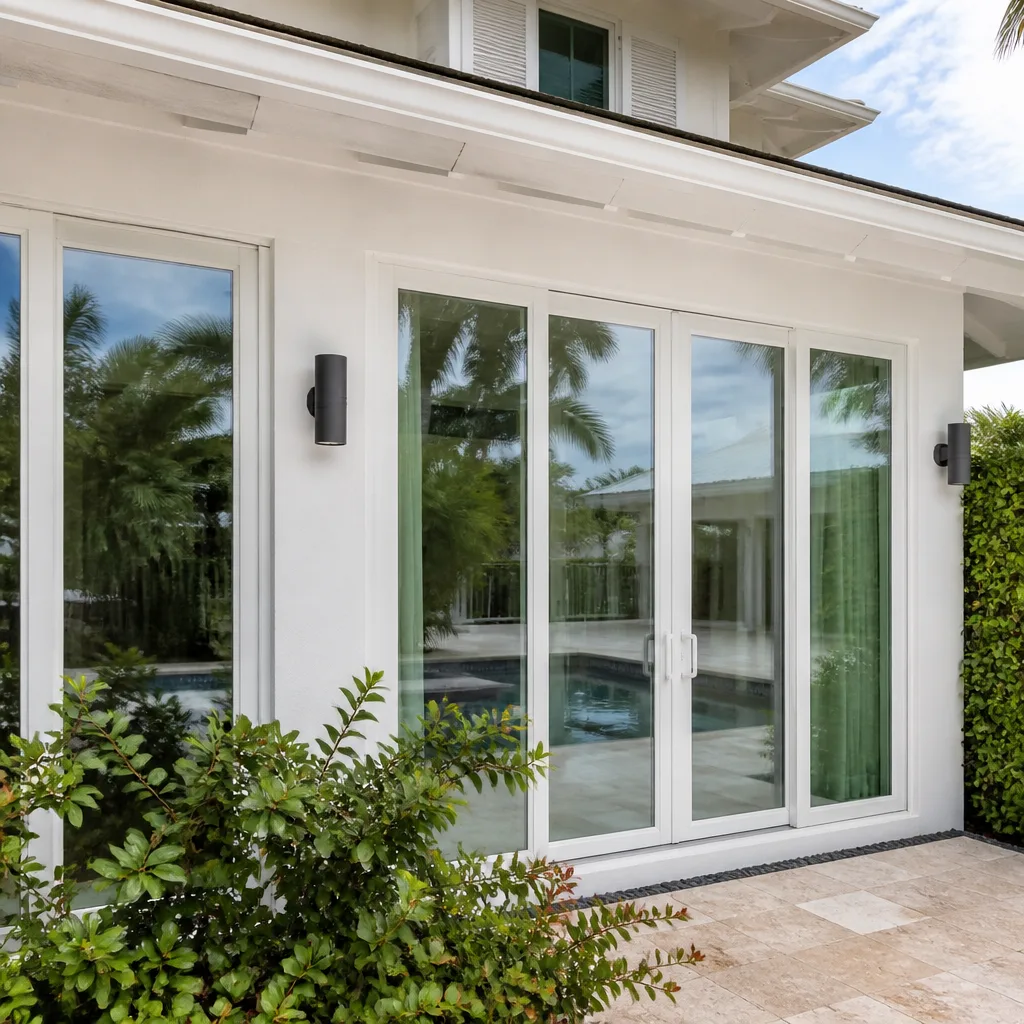 PGT
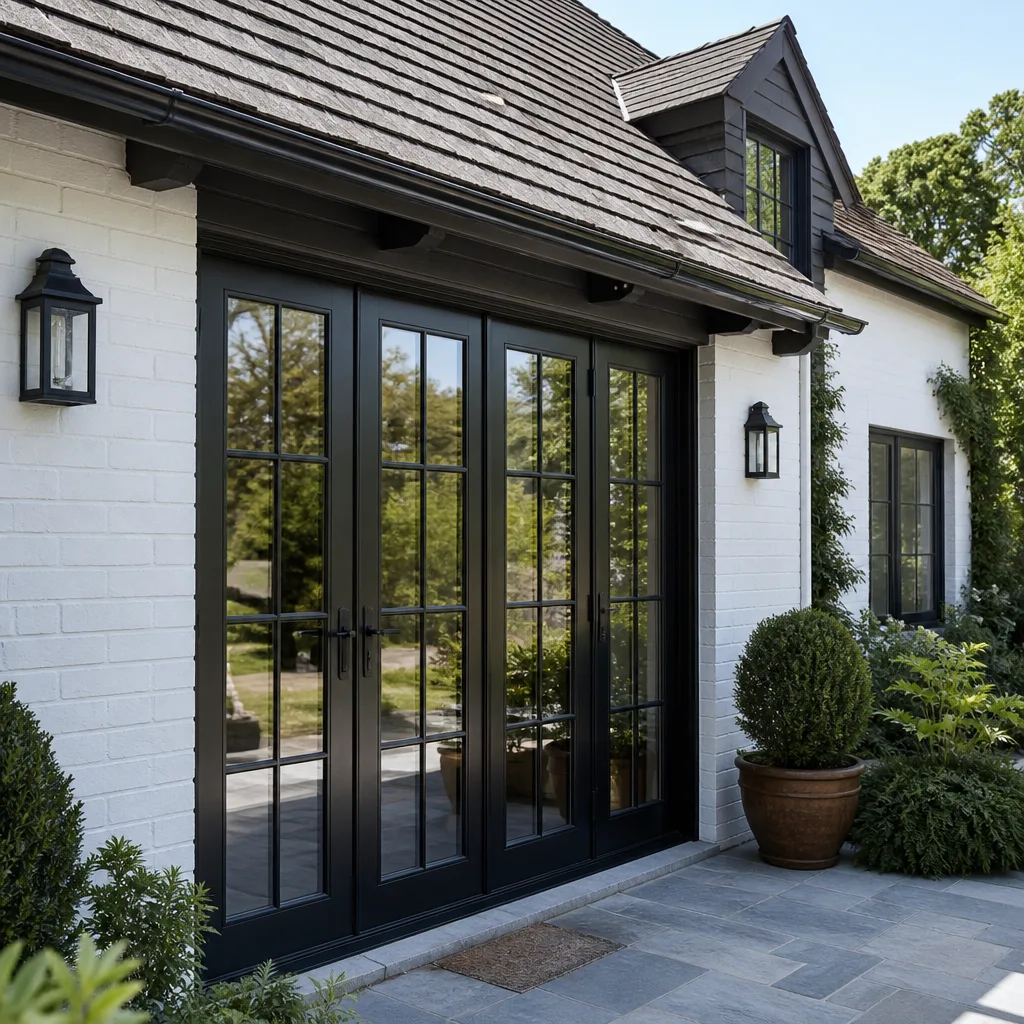 CGI
Free in-home measure and quote - PGT, CGI and CWS impact lines compared on your actual openings, style by style
Get your free estimateWindows & Doors Permits, Codes & Inspections in NV: What You Need to Know
A window replacement that skips the Clark County permit process can trigger a mandatory tear-out order at resale inspection – a situation that happens more often than the contractors who skipped the permit will admit. We’ve stood in Henderson living rooms where a homeowner held a contractor’s invoice in one hand and a notice from a buyer’s inspector in the other, and the math was ugly. The permit that would have cost a few hundred dollars became a wall of new glass pried out of a finished opening. This guide tells you exactly where the permitting line sits in Henderson, what a Clark County window and door inspection actually checks, and what an unpermitted install really costs when you go to sell.
Quick Answer
In Clark County, a permit is required whenever window or door work changes the size of the opening, alters the structural framing or header, changes the number of units, or is part of a larger remodel – a true like-for-like replacement of the same size unit in the same opening with no structural changes generally does not require a permit. All installations, permitted or not, must still meet Nevada’s energy code requirements for U-factor and solar heat gain coefficient. If you’re unsure which side of the line you’re on, assume a permit is required until a licensed professional confirms otherwise in writing.
Styles & brands we work with
- Single hung
- Double hung
- Horizontal roller
- Casement
- Bay & bow
- Sliding glass doors
- Entry doors
- Impact garage doors
- PGT
- CGI
Table of Contents
- Where the Clark County Permit Threshold Actually Sits
- Title 30 and the Energy Code Minimums for Windows and Doors
- What a Window and Door Inspection Actually Checks
- How Unpermitted Work Shows Up at Resale
- HOA Approval: The Henderson Requirement That Runs Alongside the County
- The Permit and Inspection Process, Step by Step
- What a Henderson Window Permit Costs Versus Remediation
- Common Mistakes to Avoid
Where the Clark County Permit Threshold Actually Sits
This is the point where most Henderson homeowners get surprised. The line between “replacement” and “new construction” is not as clean as a salesman makes it sound, and the permit threshold is lower than many contractors disclose on the first visit.
Clark County treats a window or door project as work requiring a permit under any of these conditions:
- The rough opening changes size at all, even a small enlargement for a picture window
- The header, king stud, or cripple framing is modified to accommodate a different unit
- Two units are combined into one, or one opening is split into two
- A window is converted to a door, or a door is converted to a window
- The project is part of a room addition, remodel, or reconfiguration that is already permitted
- The new unit changes the egress path from a sleeping room – egress openings in Clark County have specific clear-width and clear-height minimums that a like-for-like swap usually preserves but a size change might not
What generally does not require a permit is a same-size, same-location, same-operation replacement: the old double-hung comes out, the new double-hung goes in, the framing, header, and opening stay untouched. The tricky part in Henderson is that “same size” needs to be verified with a tape measure at the rough opening, not eyeballed at the interior trim. We measure every opening twice for exactly this reason. A replacement unit that requires even a small reframe pushes the job across the permit line, and once it’s across, the rough and final inspections come with it.
Storm-driven dust and 100-degree summer swings abrade and warp older frames in established Henderson neighborhoods, and a tired 1970s frame often will not accept a modern unit without some opening work. If that’s your situation, plan for the permit.
Title 30 and the Energy Code Minimums for Windows and Doors
Nevada’s energy code applies whether or not a permit is pulled. That’s a detail worth sitting with: skipping the permit doesn’t skip the code. It only skips the person whose job is to verify you met it.
Clark County’s building regulations are codified under Title 30, and the county adopts the current editions of the International Energy Conservation Code and International Residential Code with local amendments. For windows and doors, the requirements that matter most to Henderson homeowners are:
- U-factor – the rate at which a window conducts heat. Lower is better, and Clark County’s climate zone (a hot-dry Zone 3 jurisdiction for most of the valley) sets a maximum that new and replacement units must not exceed.
- Solar Heat Gain Coefficient (SHGC) – the fraction of solar heat that passes through the glass. In Henderson’s July afternoons, SHGC is the number that decides whether your west-facing living room is livable.
- Air leakage – units must meet the code’s maximum air infiltration rate, which is one reason cheap builder-grade units fail.
- Door assemblies – exterior doors, including sliding and patio doors, have their own U-factor requirements, and glazed doors are evaluated as fenestration under the same code section.
Manufacturers publish NFRC-rated labels for every unit they sell, and those labels carry the U-factor and SHGC values the code references. When we quote, we hand you the manufacturer line and its ratings side by side on paper – Andersen, Pella, Marvin, Milgard, PGT, CGI, ES Windows, CWS, Mr-Glass, and others in our authorized installer roster – so you can see exactly what you’re buying and confirm it meets Clark County’s minimums before a single unit is ordered.
The practical Henderson takeaway: don’t buy a window to a marketing claim. Buy it to a published NFRC number that clears the code for this climate zone.
What a Window and Door Inspection Actually Checks
A Clark County window and door inspection is a short visit with a long checklist, and knowing the line items before the inspector arrives is how a job passes the first time. There are typically two inspections on a permitted project: a rough inspection before interior finish goes back on, and a final inspection after everything is set and sealed.
The rough inspection is where the important verification happens. Inspectors are checking:
- Flashing and weather-resistive barrier integration at the head, jamb, and sill – the water-shedding details that fail first in a monsoon
- Framing and header adequacy if the opening was modified, including correct header span and fastening
- Correct unit installed relative to the approved plan – right size, right rating, right operation
- Anchoring – fasteners at the spacing the manufacturer requires, driven through the correct flange position
- Shimming and level, plumb, and square tolerances where the code or manufacturer specifies them
- Egress criteria if the opening serves a sleeping room
- NFRC label or documentation confirming the U-factor and SHGC meet the approved plans
The final inspection confirms the interior and exterior seals are complete, operability is correct – the window opens and locks, the door closes flush with no binding – and the job matches what was permitted. In Henderson, that binding-door check matters in July: a door that fits in March can bind in the heat if the installer didn’t leave the correct reveal. That’s one of the failures the 90-Day Done Right Promise exists to catch before you do. We don’t argue about an adjustment inside 90 days; we come back and make it right.
Information most homeowners don’t get told: the inspector does not always verify your HOA has approved the install. That’s a separate approval, and we’ll cover it below.
How Unpermitted Work Shows Up at Resale
Here’s the part that surprises people two years after the invoice is paid. Permits are public record, and buyers’ inspectors pull them. An unpermitted window or door install does not stay secret.
The paper trail shows up three ways:
- A permit search through Clark County reveals no permit where the work clearly required one, and a good inspector flags it
- The seller’s disclosure asks directly about permitted work, and answering dishonestly is a legal problem worse than the permit
- The new unit’s NFRC label and install do not match the county’s records, so the buyer’s agent recommends verification
When that happens, the buyer’s remedy is usually a demand: pull a permit retroactively and pass inspection, or credit the buyer. Retroactive permitting for a window or door project in Clark County typically requires opening up the installation enough for the inspector to verify flashing, anchoring, and framing – which can mean pulling interior or exterior finish. The framing may not be visible without removing trim or stucco. On Henderson homes in established neighborhoods like Green Valley or Anthem, that finish work is often the expensive part, and the original permit fee would have been a small fraction of it.
Many contracts for work done without a permit expire on the bonding and warranty side as well. If the installer’s workmanship warranty lapses or the company folds, the homeowner carries the full remediation. The permit is cheaper than the remediation every time, and we put that in writing with every estimate.
HOA Approval: The Henderson Requirement That Runs Alongside the County
Henderson’s master-planned communities have architectural review requirements that exist independently of Clark County permits. A county permit does not substitute for HOA architectural approval, and HOA architectural approval does not substitute for a county permit. Both can be required on the same job, and both can reject the same installation for different reasons.
Planned communities in Henderson – Seven Hills, Anthem, Green Valley Ranch, MacDonald Ranch, and the guard-gated enclaves around Lake Las Vegas – typically require:
- An architectural request form submitted before work begins, often with a drawing or photo of the proposed unit
- Color, finish, and grid-pattern approval so the new unit matches the community’s palette
- Manufacturer spec sheet and NFRC ratings attached to the request
- Approval in writing before delivery, and a copy of that approval available at the time of installation
- For front-facing or street-visible changes, sometimes a neighbor-notification period built into the community’s review timeline
The catch: HOA review can take two to six weeks depending on the community’s architectural committee schedule. That timeline is why we ask about HOA approval at the first visit. We can’t shortcut the committee’s process, but we can get the spec sheet, ratings, and color documentation into your hands so your packet goes in complete the first time. An incomplete packet is the most common reason a Henderson homeowner loses a month to a re-review.
If there’s a mismatch between what the county will permit and what the HOA will approve, the HOA is usually the tighter rule. Get the HOA approval in hand first, then build the permit application around it.
The Permit and Inspection Process, Step by Step
The sequence matters, and doing it out of order is how a Henderson project gets delayed by weeks. Here is the sequence we follow on every permitted window or door job.
- Measure the rough openings – twice, at the actual opening, not at the trim. Confirm whether the framing stays or changes.
- Confirm HOA requirements – identify the community’s architectural review requirements and start that packet early, since the HOA often runs longer than the county.
- Select the unit against code – match the NFRC-rated U-factor and SHGC to Clark County’s climate-zone minimums and to the approved plan.
- Apply for the permit – submit the Clark County building permit application with the unit specifications, site plan, and drawings as required. Most straightforward replacement projects are reviewed on a simple plan-review track.
- Receive the permit and post it – the permit card stays on the job site for the inspector.
- Pass the rough inspection – flashing, framing, anchoring, egress, and unit documentation are verified before finish goes back on.
- Install and seal – complete the unit, the interior and exterior seals, and the manufacturer’s flashing requirements per spec.
- Pass the final inspection – operability, sealing, and plan-match confirmed. Keep the signed final inspection record with your closing documents – it’s the paper that protects you at resale.
For homeowners in Henderson going through TruePane, we pull the permit as part of the project and register both manufacturer warranty layers – the unit and the installation – in writing before the truck leaves the driveway. That’s The Keystone Standard. The final inspection record, the warranty registrations, and the HOA approval all go into one folder for you.
What a Henderson Window Permit Costs Versus Remediation
We can’t quote a permit fee for your specific project without seeing the scope, but we can put the comparison in plain terms: the permit fee is a small line item next to the cost of remediation after an unpermitted job is caught.
Clark County permit fees for window and door replacement scale with project valuation – the fee is a function of the declared value of the work, so it rises with the scope. On a typical residential window and door replacement in Henderson, the permit fee itself is usually a modest percentage of the total project cost. The inspections are included with the permit.
The remediation side is where the numbers climb. Retroactive permitting often requires opening up the installation for inspection – removing trim, sometimes cutting back stucco or drywall – then reinstalling finish after the inspector signs off. Add the additional trade labor for that uncover and re-cover work, the possible re-inspection fees, and the resale credit a buyer demands when they discover the work was unpermitted, and the total can run several times the original permit cost. It’s not close.
We quote line items on paper so you see the permit, the labor, the units, and the disposal as separate lines. No surprise line items on the bill. If a contractor’s bid doesn’t show you the permit line at all, ask why – and get the answer in writing.
Common Mistakes to Avoid
- Trusting a verbal “you don’t need a permit” without verifying the threshold. Some contractors say it to avoid the inspection timeline. Ask the contractor to confirm in writing that the opening is not changing size or framing, and if they can’t, pull the permit.
- Skipping the HOA packet in a Henderson master-planned community. A county permit won’t save you from an HOA violation notice – and the HOA can require the unit to come out if it wasn’t approved.
- Buying a window to the brochure instead of the NFRC label. In Henderson’s climate zone, an SHGC or U-factor that misses the code minimum is a code failure no matter how good the showroom looked.
- Assuming the final inspection is done when the installer says it’s done. Keep the signed final inspection record. It’s the document that clears you at resale.
- Letting the installer skip flashing details to save a day. The rough inspection exists to catch exactly this, and unshed water at the head and sill is the leading cause of the soggy wall we get called to fix around monsoon season.
- Not verifying the warranty registration. An unregistered manufacturer warranty on the unit and the installation is a promise the next homeowner may not be able to collect on. Get both layers in writing before the truck leaves.
- Choosing on price alone. The cheapest bid that skips the permit, the HOA packet, and warranty registration is the most expensive bid you can accept – you just don’t find out until the sale.
See the difference
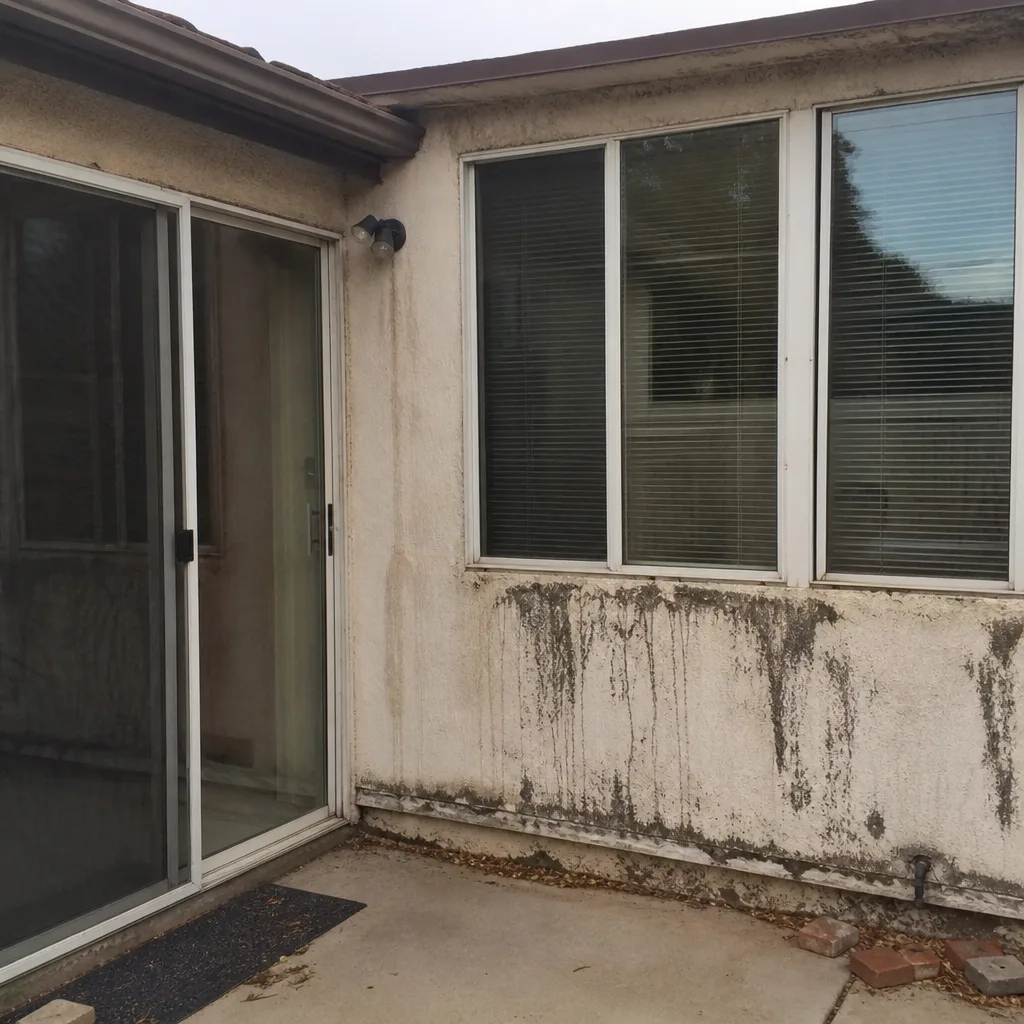 Before
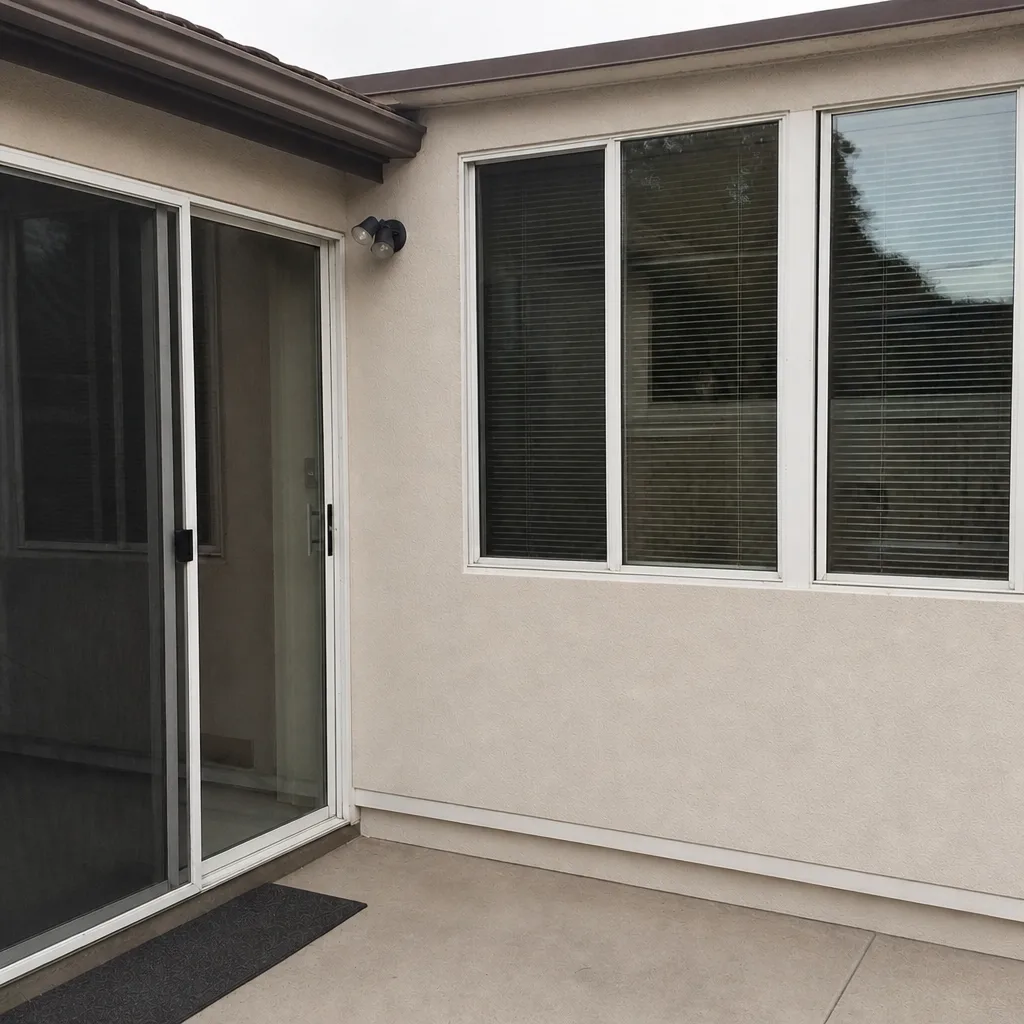 After
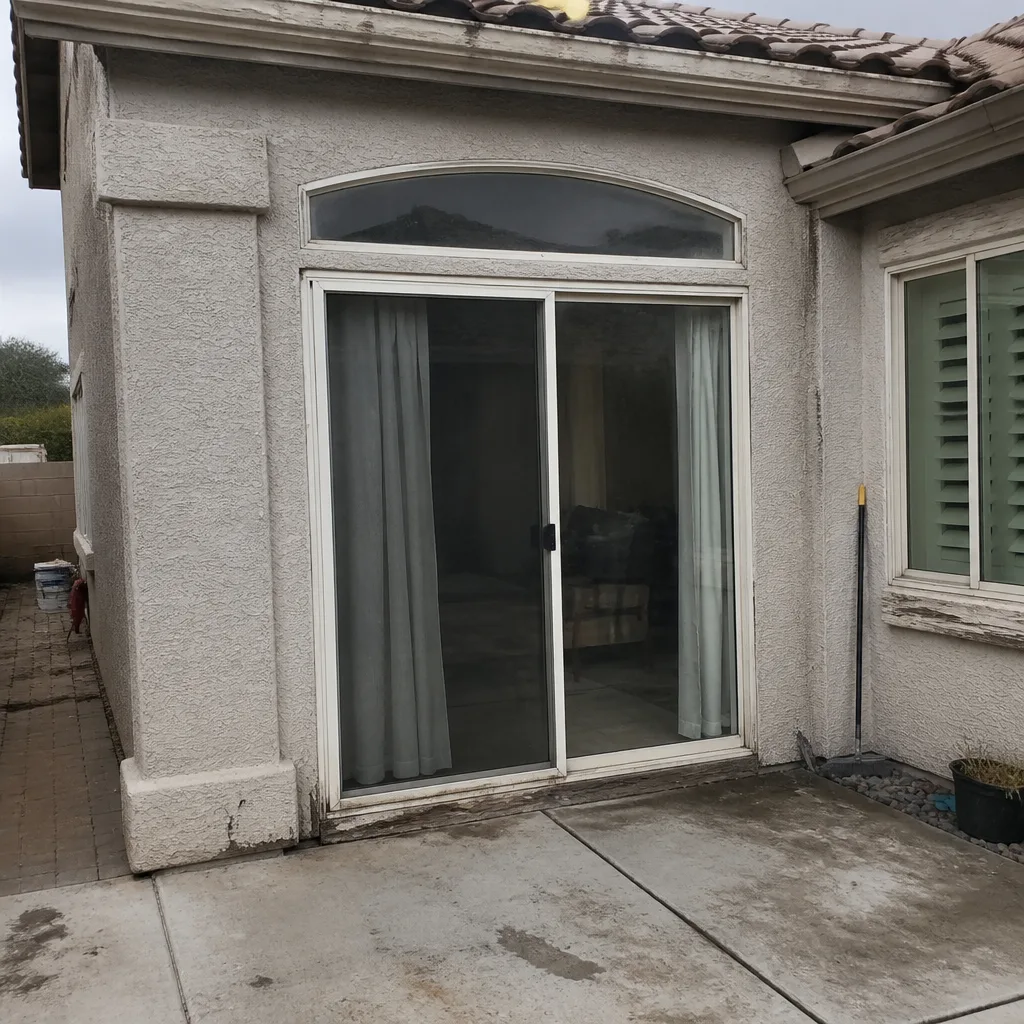 Before
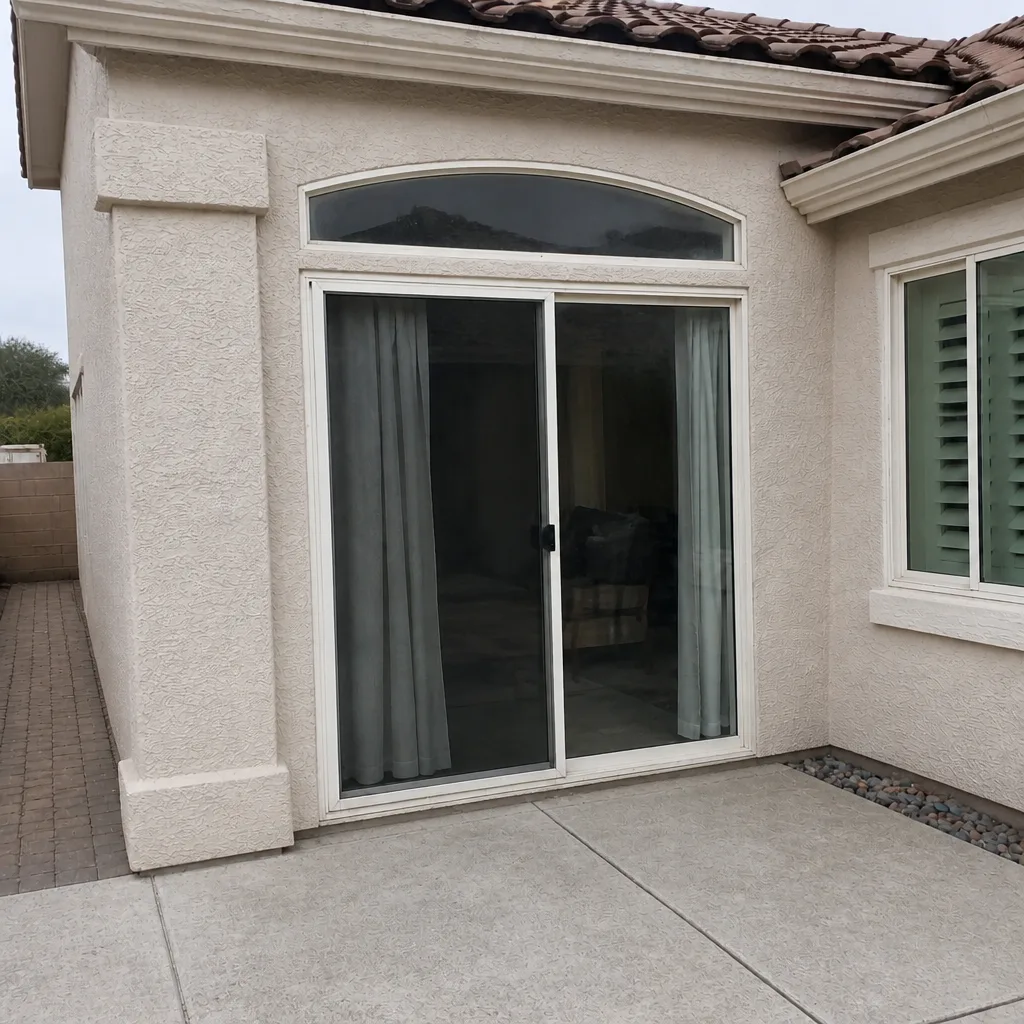 After
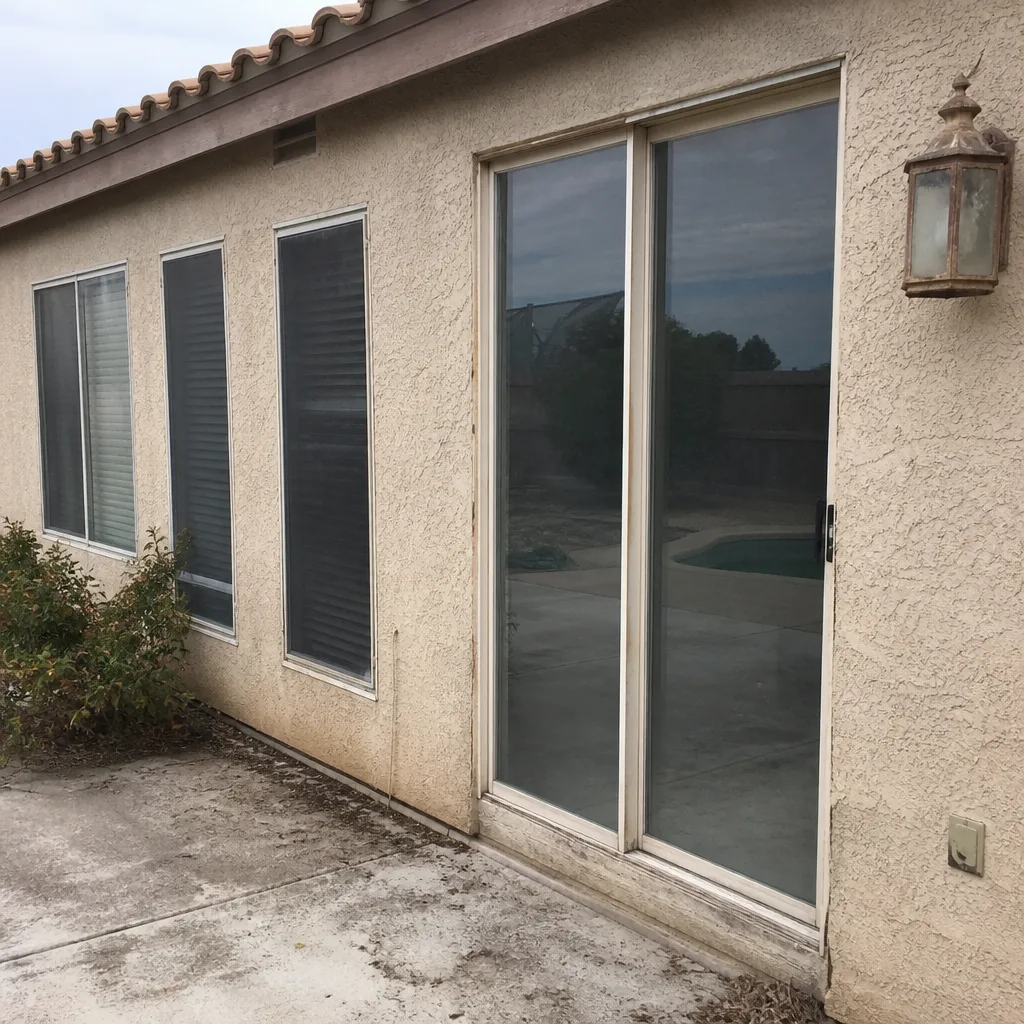 Before
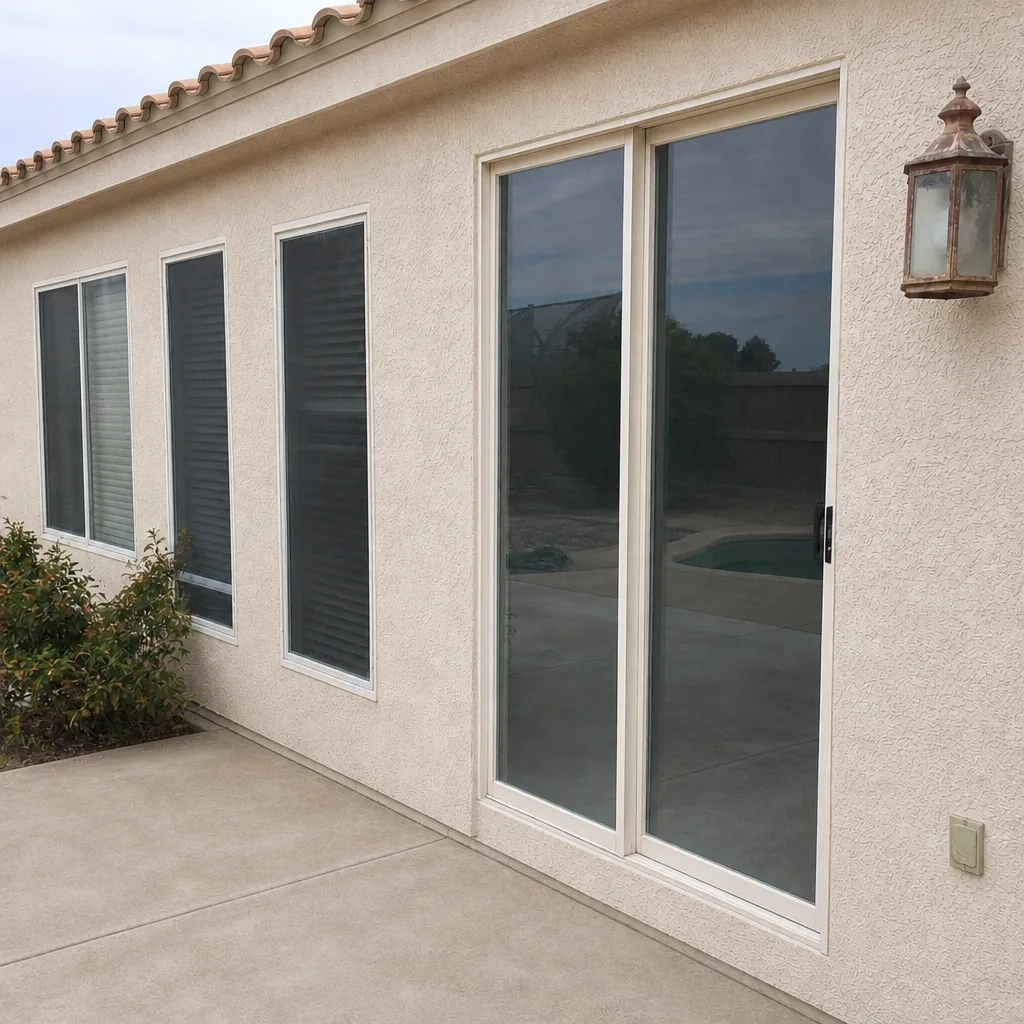 After
When to Call a Professional
If a window or door project in Henderson involves anything other than a same-size, same-location swap, the permit question alone is worth a professional call. If the opening changes, if the framing gets modified, if a window becomes a door, or if you’re in a master-planned community with architectural review, don’t gamble on a verbal assurance. If the home has been through a dust storm, a monsoon, or a hot summer that left a door binding at the jamb, have the assembly evaluated before you assume the unit is fine. If you’ve bought a home and discovered unpermitted window work, a licensed installer can help you understand what a retroactive permit will require before your buyer’s inspector makes that call for you. TruePane Windows & Doors Henderson offers free estimates in Henderson – call (833) 842-6670. Every project comes with the 90-Day Done Right Promise and The Keystone Standard, and every quote is line-itemed on paper so you see the permit and the labor before you commit.
Frequently Asked Questions
It depends on whether the opening or framing changes. A true like-for-like replacement of the same size unit in the same opening, with no structural changes, generally does not require a permit; any change to the rough opening, header, framing, or the number of units triggers a permit and inspections. If you’re unsure, call (833) 842-6670 and we’ll help you confirm before anything is ordered.
The rough inspection verifies flashing and weather-barrier integration, framing and header adequacy, anchorage and fastener spacing, correct unit and rating, egress compliance for sleeping rooms, and NFRC documentation. The final inspection confirms sealing, operability, and that the finished job matches the approved plan. Both are checks on the work, not a summary – the rough inspection is the one that catches water-shedding details before they’re buried under finish.
Buyers’ inspectors pull permit records, and a missing permit will surface. When it does, the buyer’s remedy is typically a demand to retroactively permit and pass inspection, or a credit at closing. Retroactive permits often require opening up the installation for inspection, which means removing trim or sometimes stucco – the remediation cost typically far exceeds what the original permit fee would have been. Call (833) 842-6670 for a free estimate and we’ll walk you through the paperwork.
Yes, if your home is in a master-planned or planned community. Henderson communities like Seven Hills, Anthem, and Green Valley Ranch maintain architectural review requirements that are separate from Clark County permitting. A county permit does not satisfy the HOA, and the HOA can require the unit to be removed if it wasn’t approved. Get the HOA approval in writing before delivery – the review can take several weeks.
Possibly, but there’s no one verifying it, and the homeowner carries the risk. Code compliance is verified by the inspection, not by the installer’s assurance. A unit can be installed to code criteria and still fail at resale because the permit record doesn’t exist. The paper trail is part of the code compliance – call (833) 842-6670 and we’ll make sure both are in place.
Plan review timelines vary with the county’s workload, and the HOA review often runs longer than the county. A realistic plan for a Henderson project allows several weeks from application to final inspection, and we schedule the install around that timeline rather than promising a date we can’t keep. Call (833) 842-6670 for a free estimate and we’ll give you a realistic schedule in writing.
The Bottom Line
The permit threshold in Clark County is lower than most Henderson contractors disclose, and the cost of getting it wrong is paid at resale, not at installation. A true like-for-like replacement usually doesn’t need a permit; anything that changes the opening, the framing, or the number of units does, and so does anything caught up in a larger remodel. All installs still have to meet Nevada’s U-factor and SHGC minimums regardless. The inspection verifies the details that keep water out of your walls, and the signed final record is the paper that protects your sale. If the HOA applies, get that approval first. When in doubt, measure twice and call us.
For window and door installation, replacement, or service in Henderson, TruePane Windows & Doors Henderson home is the place to start. Learn more about our Window Installation in Henderson, Door Installation in Henderson, and Window Replacement in Henderson services, and see how The Keystone Standard protects your project from the first measurement to the final inspection.
Call (833) 842-6670 for a free estimate. A live person answers the phone 24 hours a day, 7 days a week. Our technicians have up to 18 years of experience, every job is backed by the 90-Day Done Right Promise, and we put your permit, your HOA packet, and both warranty layers in writing before the truck leaves the driveway. Standing offers include $50 off any repair over $250, an $89 Seasonal Tune-Up, and a permanent 5% discount for seniors and veterans.
Written by the team at TruePane Windows & Doors Henderson.