
Last updated November 18, 2026
 Sliding glass doors
 Single hung
 Double hung
 Horizontal roller
 Casement
 Bay & bow
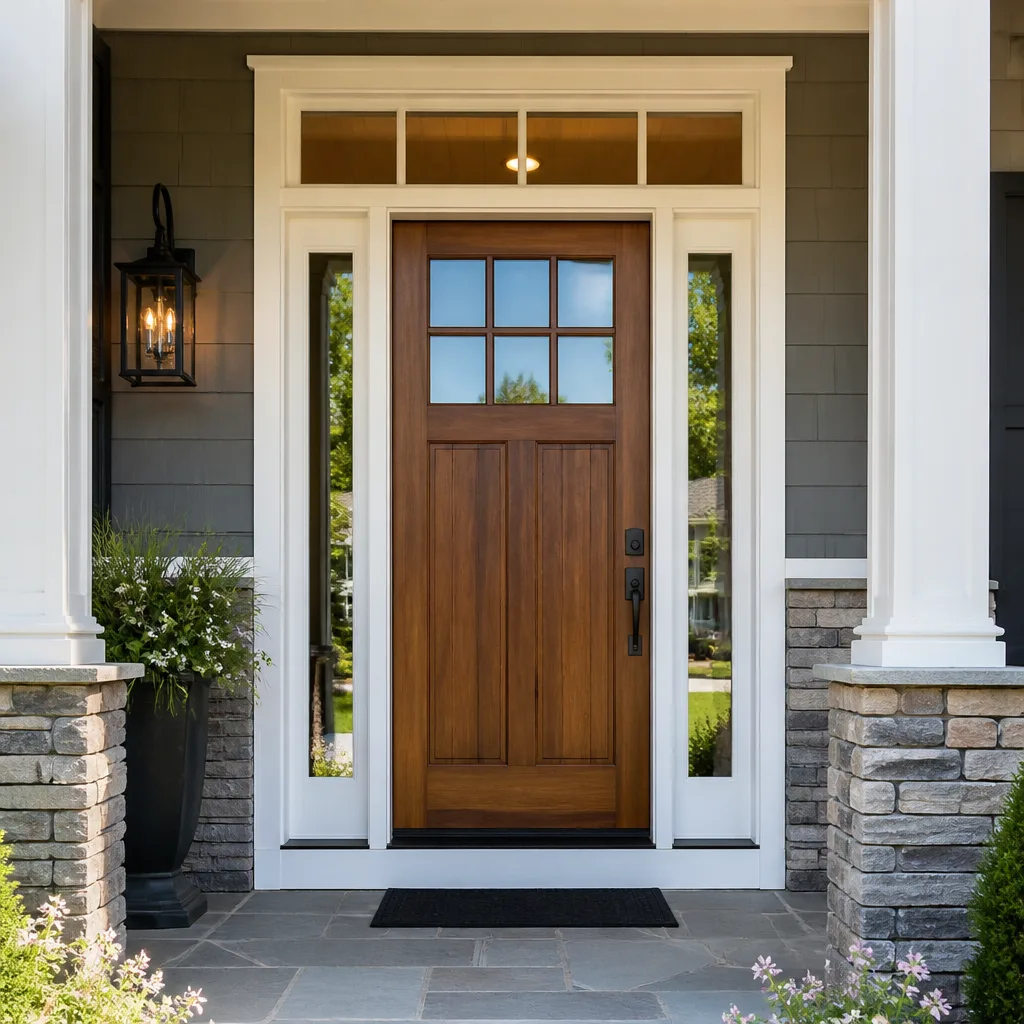 Entry doors
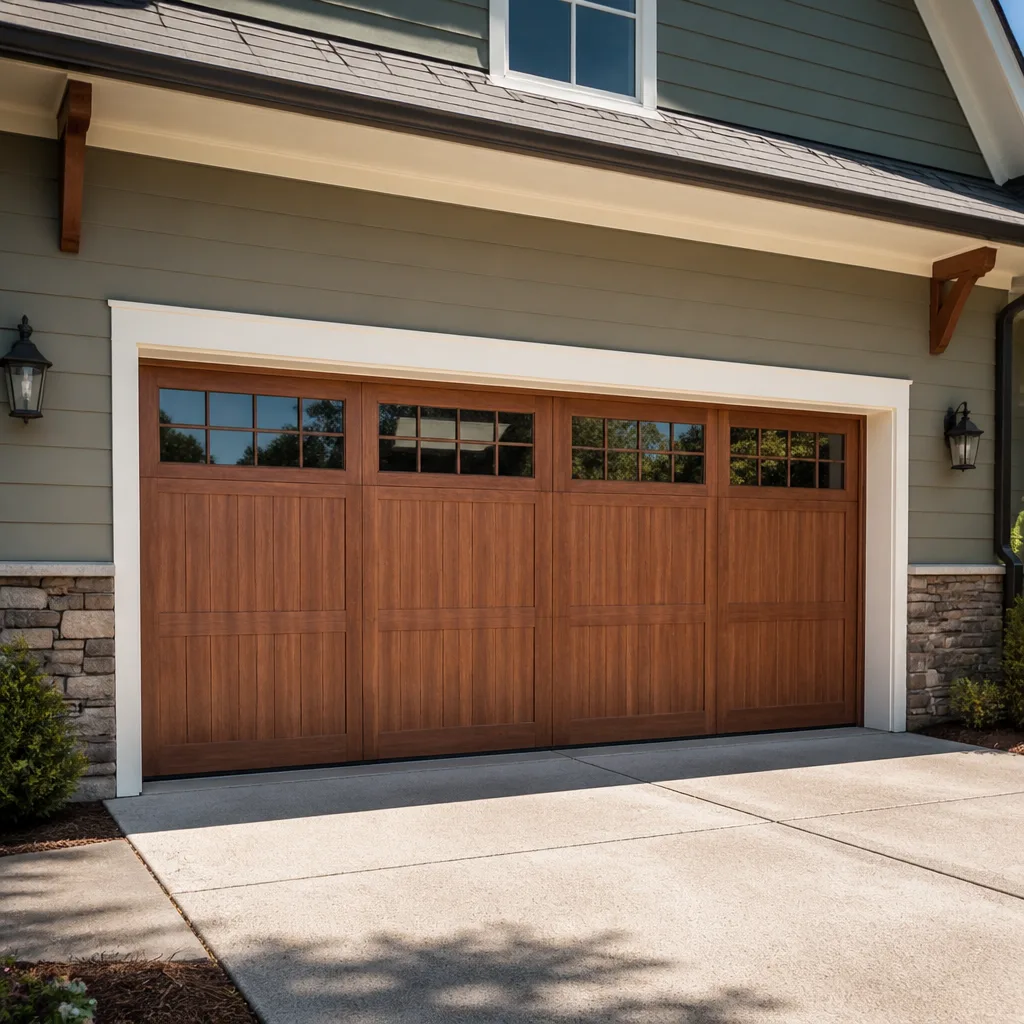 Impact garage doors
 PGT
 CGI
Free in-home measure and quote - PGT, CGI and CWS impact lines compared on your actual openings, style by style
Get your free estimateWindows & Doors Warning Signs: A Henderson Homeowner’s Reference Guide
The white mineral streaks running from a window corner down a stucco wall aren’t a staining problem. They’re efflorescence from water moving through the frame flashing, and the wall damage is already in progress. We’ve pulled frames off Henderson homes where that chalky line was a year old and the stucco behind it had gone soft. The plaster looked fine from across the yard. The window looked fine from inside. The failure was silent. Most of the expensive ones are. This guide names the warning signs that announce themselves months before they cost you real money, explains the mechanism behind each one, and tells you where repair stops making sense and replacement starts. If you’ve lived in your Henderson house for twenty years or more, you’ve probably already seen two or three of them and dismissed them as cosmetic.
Quick Answer
In a Henderson home, the most costly window and door failures give visible warnings six to twelve months before they fail completely. Look for fogging or haze between glass panes, a visible gap at vinyl frame corners, drag or binding on door sills, water stains below the threshold, and energy bills that climb without explanation. Catch any one of these early and it’s often a repair. Dismiss it for a second summer and it’s usually a replacement.
Styles & brands we work with
- Single hung
- Double hung
- Horizontal roller
- Casement
- Bay & bow
- Sliding glass doors
- Entry doors
- Impact garage doors
- PGT
- CGI
Table of Contents
- Insulated glass failure in a desert climate
- Frame corner separation and thermal cycling
- Door threshold and sill pan warning signs
- Drag, binding, and latch misalignment
- Energy bill anomalies as a window warning sign
- A homeowner’s seasonal inspection routine
- The repair-or-replace decision point
Insulated Glass Failure in a Desert Climate
An insulated glass unit, or IGU, is two or three panes sealed around a hollow cavity with a desiccant edge. That seal keeps moisture out and the argon or krypton gas in. When the seal fails, the unit fogs. But Henderson doesn’t fail an IGU the way Seattle does, and knowing the difference saves you from misreading a problem that’s barely started as one that’s finished.
Here’s what UV and heat do to a seal over time. Southern Nevada gets more than 200 clear days a year, and the glass surface temperature on a west-facing window in July swings from roughly 70 degrees at dawn to 150-plus by late afternoon. That cycle pushes the perimeter seal through thousands of expand-and-contract movements over a decade. The sealant eventually loses adhesion at one spot, usually the bottom edge where heat is highest. Once it opens, moisture gets in. Desiccant works through a desiccant field on some units; others rely on the compressed gas seal.
The three conditions get confused constantly.
- Condensation is water film on the room-side face of the glass, or between panes when the interior is humid. On a Henderson window, interior-face condensation usually points to high indoor humidity from a bathroom or swamp cooler, not a failed window.
- Argon loss haze is a faint fog that appears and stays, even in dry weather and even after wiping both faces. It looks like a smoky film that won’t come off. This is a partial gas loss, not a wet seal.
- Seal failure is permanent fogging between panes, sometimes streaking or a whitish film at the bottom edge, and it does not clear. Once the desiccant saturates, the unit is done. No cleaning, no chemical, no wipe will fix it.
High-UV environments accelerate the low-E coating degradation that fogs the brightest Henderson exposures first. West and southwest windows age ahead of north windows. In older neighborhoods like Old Henderson and along the older Thompson Ranch streets, we regularly see a sixteen-year-old south-facing unit start hazing while the shaded units on the same home are still clear.
The clean test: shine a flashlight at a shallow angle against the glass at dusk. If you can see your reflection with a smoky halo you can’t wipe away, the unit is going. If the haze only shows on humid mornings and clears by noon, watch it for another season before you write it off.
Frame Corner Separation and Thermal Cycling
Vinyl window frames are mitered at the corners and welded or bridged. Over time, the weld can separate. Henderson’s thermal cycling accelerates it faster than most markets because the daily swing is wide and the UV load is severe. Vinyl expands and contracts more than wood or aluminum, and the corner joint is the weakest point on the frame.
You can see it. Look at the outside bottom corner of a window frame, where two pieces meet. A hairline seam is normal. What’s not normal is a gap you can slide a business card into, or a corner where the two frame pieces have visibly pulled apart and the seam is visible from inside the room.
Get out a tape measure or a credit card and check three things:
- The corner gap. A business card edge (about 1/32 inch) that slips into the seam is a warning sign. The width of a credit card (about 1/16 inch) at the same corner is the practical cut-off where repair stops making sense for most vinyl frames. At that gap, water gets behind the frame, the glass edges get wet, and replacement usually costs less than repairing the frame and reseating the unit.
- Corner cracks in the surrounding stucco. A corner gap almost always follows diagonal cracks in the stucco at the window opening. The stucco cracks because the frame has shifted, not because the stucco is failing on its own.
- The inside joint at the sill. Run your hand along the inside bottom corner. If the joint has opened and you feel a lip or a nick, thermal movement has worked the corner loose at both inside and outside faces.
Some corners can be repaired. A small gap can be sealed and the frame stabilized. But once the corner is separated by the width of a credit card at multiple corners of the same window, you’re looking at a frame that will keep moving. In Henderson’s heat, that window is a replacement. This is why stepping up to a properly built line at replacement time – the PGT and CGI frames we install, for example – matters more than a low bid from a thin-weather vinyl frame.
Door Threshold and Sill Pan Warning Signs
The most overlooked water intrusion path in a Henderson house is under a sliding or patio door. The threshold looks solid from above. The sill pan underneath is what protects the wall. When the pan was never installed, was installed wrong, or has failed, monsoon rain finds the seam and works its way into the wall cavity.
Monsoon season in the Las Vegas valley runs roughly July through September and delivers a year’s worth of sudden downpours in a handful of storms. A door that survived ten dry years can be wet through the wall in one afternoon if the sill pan isn’t right. That’s why a Henderson homeowner needs to look at the wall under the door, not just the door.
Warning signs of water infiltration at a threshold:
- Mineral streaks below the threshold on the exterior wall. Efflorescence runs vertically down stucco from the door opening. It’s a sign water is moving through the frame and drying at the surface.
- Paint lift or bubbling along the baseboard under the door, inside. The paint is telling you the drywall behind it is wet and swelling.
- Diagonal stucco cracks radiating from the lower door corners. Not a cosmetic crack. Water is finding the corner, then the stucco is letting go as the substrate moves.
- A soft spot under the threshold on the interior floor. Press with your thumb. A give or a spungy feel means the sill area has been wet long enough to soften.
- Daylight visible under the closed door on a bright day. A gap that wasn’t there before means the door has shifted, the sill has settled, or the seal has given up.
The wise move here is not to seal over the problem with caulk. A caulk line over a failed sill pan traps water instead of stopping it, and the rot spreads behind the stucco where you can’t see it. If the streaks and the paint lift are both present, it’s time to have the opening inspected properly.
Drag, Binding, and Latch Misalignment
A door that drags in July and swings free in January is trying to tell you something. The question is what. Three conditions present almost identically, and the fix is different for each.
Foundation settlement is the most serious. Henderson homes sit on soils that move with moisture, and the clay-rich pockets under homes in older parts of the city can settle unevenly. When the floor plane shifts, the door frame racks. The tell: the gap at the top of the door is uneven, one side wider than the other, and it grows. The latch strikes low on one side or high on the other, and no amount of striking-plate adjustment holds. Check the corners of your rooms for cracks and the door frame for rack. If the frame is out of square by more than about 1/4 inch, the window or door problem is a symptom, and it’s worth having a foundation inspection before you replace anything.
Hardware wear presents mostly on interior doors and older doors. The hinges wear out, the door sags at the latch side, and the striker won’t catch. The door binds near the latch, not at the top or bottom. Hinges that show a dark gap between knuckle and pin need replacing. That’s a hardware fix, not a window or door replacement.
Frame warping is the middle case, and the most common in Henderson. Vinyl and thin weather frames warp under heat, particularly on west-facing patio sliders and hinged exterior doors. The door warps at the middle of the panel, binding at top and bottom. This is not a hinge problem. This is a door that has been cooked, and the fix is either realigning the frame or replacing the unit.
The three-way test homeowners can run in a few minutes:
- Open the door halfway and look at the gap at the top of the door leaf. A gap that’s even left to right is a hardware problem. A gap that’s wider on one side is settling or warping.
- Check the corners of the room or the door opening for cracks. If you see them, it’s settlement first.
- Look at the door panel itself on a hot afternoon. A visible bow toward the sun is heat warping, and it will only get worse.
If you’re unsure of the read, don’t guess. Diagnosis is free, and a wrong guess costs an install you didn’t need.
Energy Bill Anomalies as a Window Warning Sign
A window that suddenly can’t hold its weather is a window that shows up on your utility bill before it shows up in the glass. The pattern of the jump tells you which failure you’re looking at.
Failed low-E coating shows on cooling costs in summer, not heating. Low-E reflects the sun’s infrared before it enters the room. When it degrades, usually on the same west and southwest faces that bake the seal, the room gains heat in the afternoon. The pattern: cooling cost climbs in July and August while the same rooms that used to stay cooler now run warm. The window doesn’t look bad from the outside. From inside on a hot day, you can feel heat radiating from the glass itself.
Failed weatherstripping shows on both heating and cooling. Air leaks at the frame edge, along the sash, or around the door sill. The pattern: a draft you can feel with your hand near the frame on a windy day, and a bill that steps up in both winter and summer. The glass itself is fine. The seal around the operable parts has gone.
Failed IGU shows the way a failed seal shows – the unit has lost its gas, so the insulating value drops. Here the bill creeps up while the glass is visibly fogging or hazing. The two signs usually arrive together.
The practical diagnostic: compare two consecutive July bills from your utility on opposite sides of the house if you have zoned comfort, and feel the inside face of each window on a 105-degree afternoon in Henderson. The windows that feel hot to the touch and have fogged glass are the ones failing. Windows that feel hot but have clear glass are a low-E problem. Windows that feel cool but let a draft through are a weatherstripping problem. Same bill increase, three different fixes, and only a proper inspection tells you which you have.
A Homeowner’s Seasonal Inspection Routine
Walk your home twice a year and you’ll catch most failures before they cost real money. In Henderson, do it once in late spring, before the summer heat load, and once in late fall, after monsoon season has had its say.
- Start outside at each window. Run your hand along each frame corner and look for a gap, a chalky streak, or a diagonal crack in the stucco.
- Look at the glass at a shallow angle. Late afternoon, with the sun at an angle, is best. A smoky film between panes is your first sign of IGU trouble.
- Check every threshold and sill. Look for efflorescence streaks down the wall and paint lift on the baseboards inside.
- Operate every door and every operable window. Open and close them fully. Note any drag, any latch that doesn’t catch, any gap that’s new.
- Feel the inside face of the glass on a hot day. Hot glass on a west-facing window points to low-E degradation.
- Compare the utility bill year over year. A step up that doesn’t match an obvious weather event or rate change is a window flag.
- Check for drafts on a cool morning. Run your hand along the frame edges and door sills. A draft you can feel at the frame is a weatherstripping issue.
Write the date on the frame with a pencil or keep a paper list in the utility drawer. A second summer of fogging is replacement; a first summer is watch. Keeping the date matters, because six months of haze looks the same as two years of haze unless you tracked it.
The Repair-or-Replace Decision Point
Here’s where homeowners lose money. We’ve seen a homeowner pay for two IGU replacements on the same window in three years when the frame corner was the real problem and both units were doomed before the truck left the driveway. The frame fails first. The glass is the symptom. If the frame corner gap is at the credit-card width, replacing the glass won’t hold because the new unit sits in a moving frame.
Rough decision rules for a Henderson home:
- The glass alone. One fogged unit, frame and stucco sound, no leak. The unit can be replaced. This is the case where a single repair makes sense.
- The frame corner. A hairline corner gap is repairable. A gap you can slip a credit card into at the corner, plus cracks in the surrounding stucco, usually favors replacement. At that stage, a new window costs less than repairing a frame that will keep moving.
- The threshold. Visible water infiltration at a door sill with paint lift and efflorescence together means the opening should be replaced and the sill pan rebuilt. Re-caulking does not fix this.
- The frame rack. A frame that’s out of square from foundation settlement needs the foundation addressed before the window. Otherwise the new window racks too.
Age matters less than condition on a Henderson home. A twenty-year-old frame that’s still square and sealed well is fine. A twelve-year-old west-facing unit that’s fogged, cornered, and leaking is a replacement. When replacement is the answer, the work of window replacement in Henderson is one we can speak to directly, and doing it properly starts with measuring every opening twice and quoting on paper – not with a brochure and a handshake.
See the difference
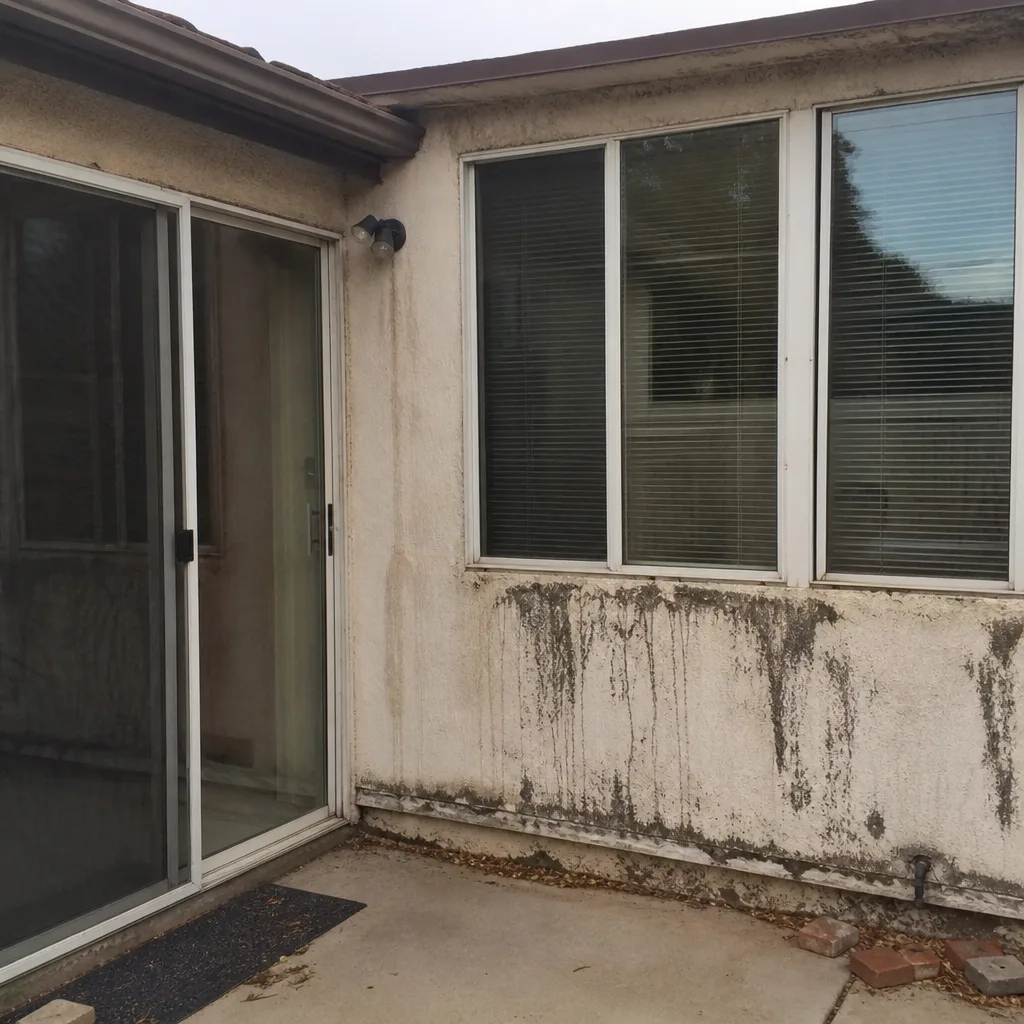 Before
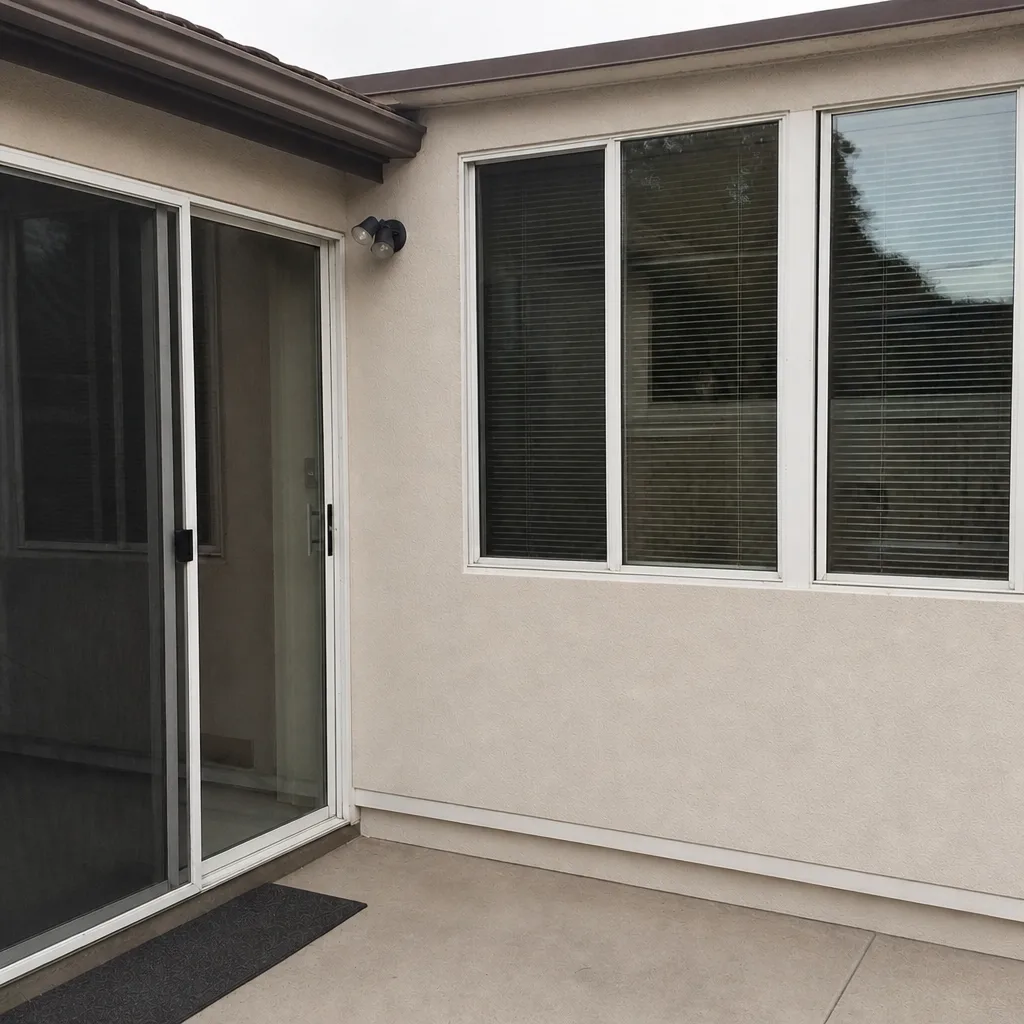 After
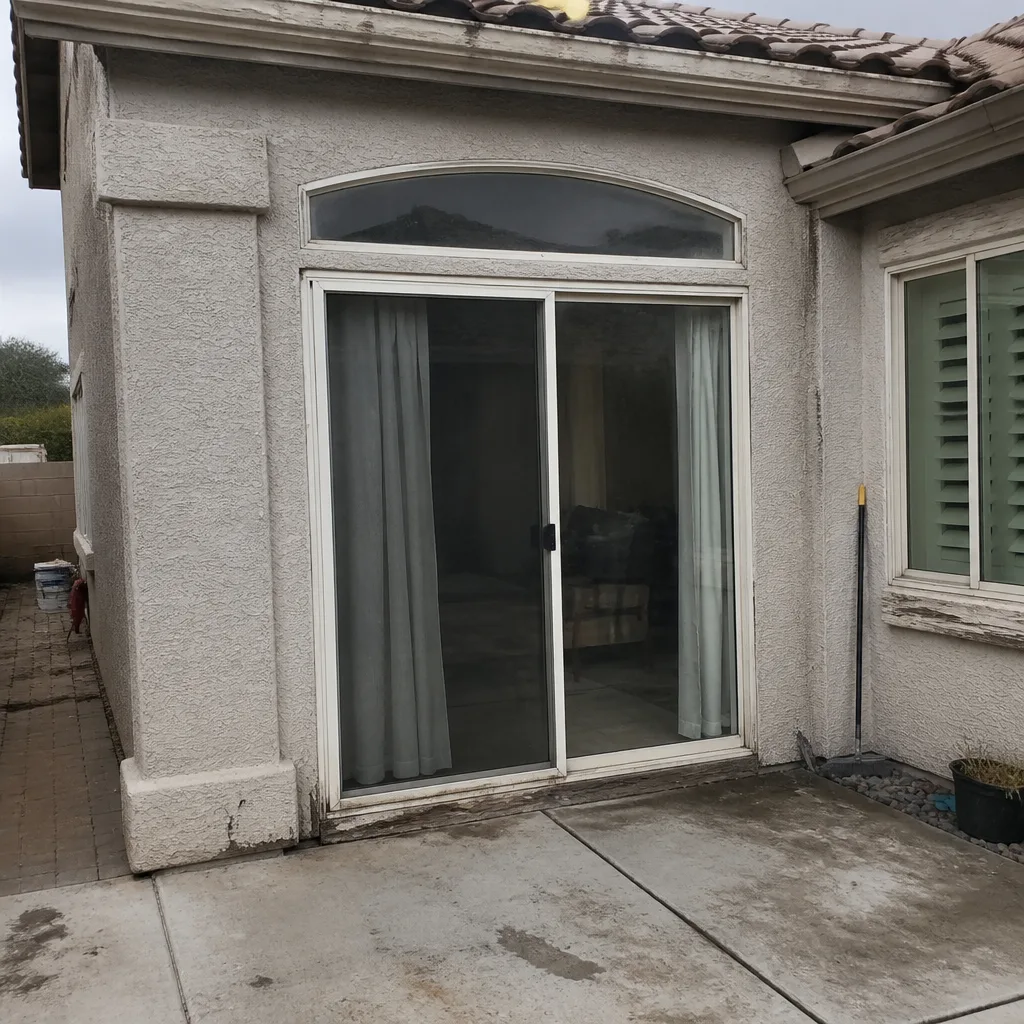 Before
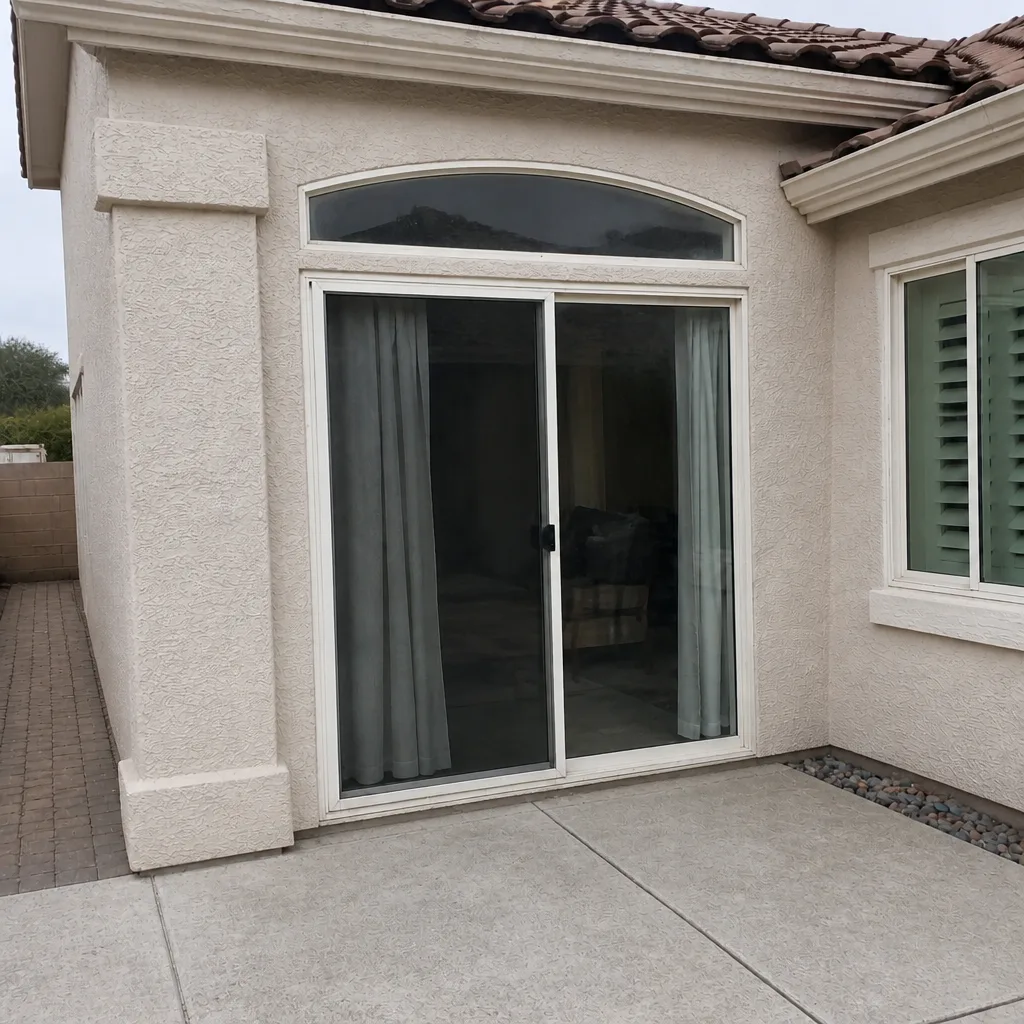 After
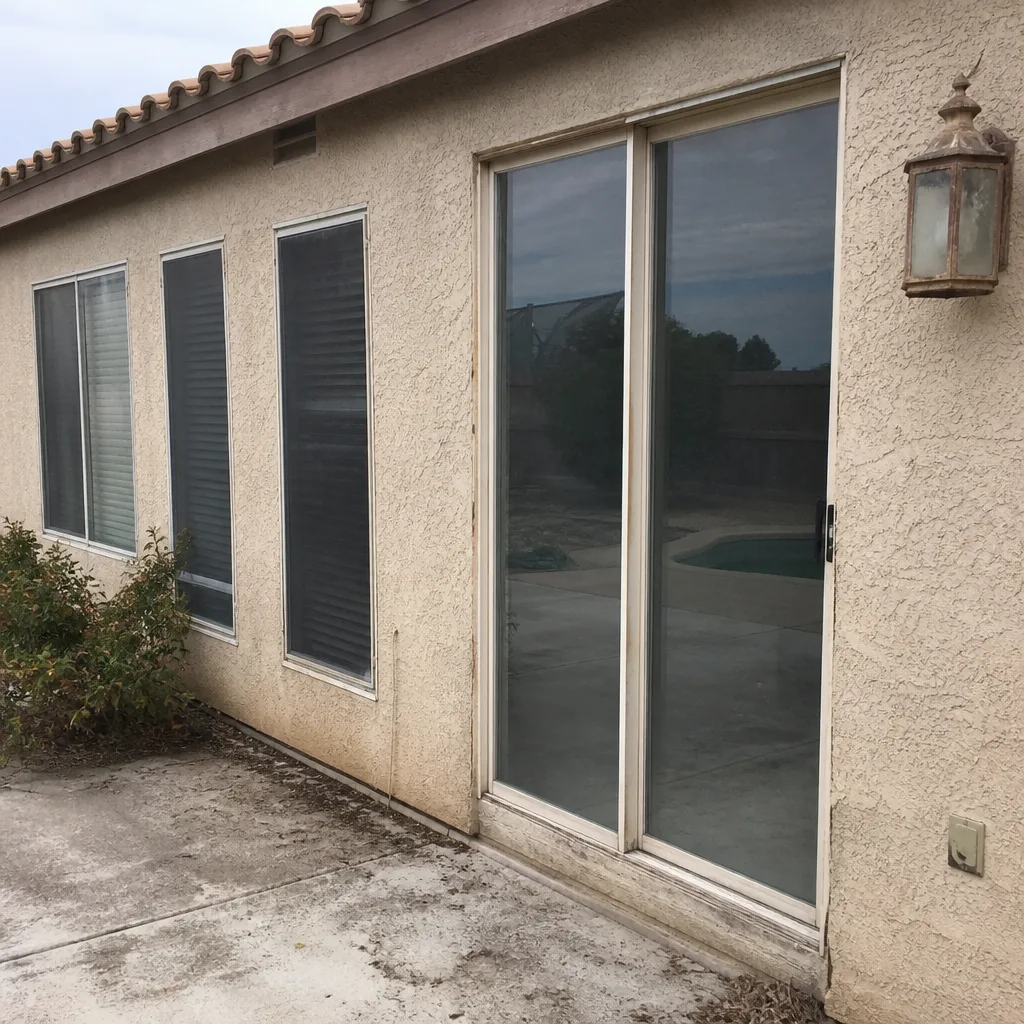 Before
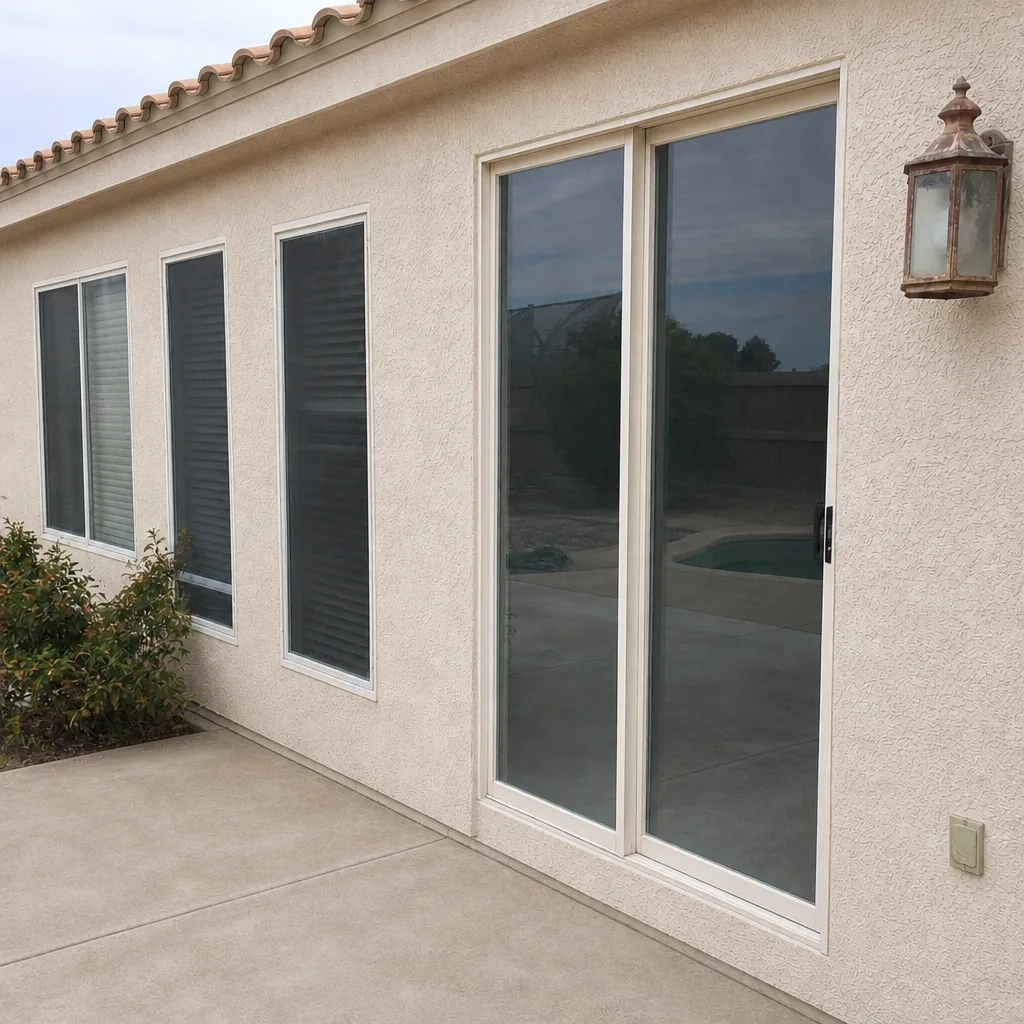 After
Common Mistakes to Avoid
- Caulking over a failed sill pan. A caulk line stops the visible symptom and traps the water where it rots the wall. Fix the pan, or replace the opening.
- Treating fog as a cleaning problem. A fogged IGU is failed, and no wipe, spray, or chemical hits it. Don’t pay a cleaning service for a seal failure.
- Replacing a window on a racked frame. If the house has settled, a new window on a moving frame racks too. Address the frame first.
- Reading one bill jump as one failure. A high cooling bill can be low-E, weatherstripping, or a failed IGU. Diagnose which before you buy anything.
- Skipping the corner gap because the window still looks good. A visible frame corner gap is a warning sign regardless of whether the glass still looks clear. It’s the frame that fails first.
- Letting a monsoon leak sit until it dries on its own. Henderson monsoon water in a wall cavity doesn’t dry fully in a stucco home. It stays, and it rots the substrate behind the paint.
- Hiring on price alone for water-intrusion repair. The cheapest bid on a sill pan rebuild usually skips the pan. Ask any installer to show the pan on the drawing before they start.
When to Call a Professional
Call a professional when you see a credit-card gap at a frame corner, fogging that has lasted more than one season, paint lift under a door, or a draft you can feel at the frame on a windy day. Call when a door drags in July and clears in January, because that’s the diagonal warning of settlement and it’s cheaper to diagnose early. Call when two or more warning signs show on the same opening, because the compounding cases are the ones where the fix is bigger than the sign. And call if you’re uncertain what you’re looking at – a free estimate is a diagnosis, not a commitment. TruePane Windows & Doors Henderson offers free estimates in Henderson. Call (833) 842-6670. You’ll reach a live person any hour of the day or night, and our technicians have up to 18 years of experience reading exactly these signs.
Frequently Asked Questions
If the fog between the panes is permanent – it stays after wiping both faces and doesn’t clear in dry weather – the insulated glass unit has failed and the glass needs to be replaced. If the frame corner is still tight and the surrounding stucco is sound, replacing the glass unit alone can fix it. If the frame corner is separated or the glass has fogged twice, replace the whole window.
Condensation clears. A failed seal doesn’t. Room-side condensation is water film on the glass you can wipe away. A failed seal is fog between the panes that you cannot reach and that stays. In Henderson’s desert climate, permanent haze between panes is almost always seal failure, and wiping does nothing.
Henderson’s thermal cycle – hot days, cool nights – expands and contracts vinyl frames hundreds of times a year, and the corner is the weakest joint. UV exposure accelerates it. A hairline seam is normal. A gap you can slip a credit card into at the corner, with cracks in the surrounding stucco, is a frame that’s failed and usually calls for replacement.
Look at the gap at the top of the door. An even gap left to right points to hardware wear – a hinge problem. An uneven gap, wider on one side, along with cracks in the room corners, points to foundation settlement. A door that binds in the middle of the panel on a hot afternoon is likely heat warping. Each needs a different fix, so diagnose before you replace.
Check the wall below every door and window opening for mineral streaks and paint lift, feel under the threshold for a soft spot, and look for diagonal stucco cracks at the lower corners. Water intrusion at a sill pan shows up within weeks of a monsoon event – the earlier you catch it, the less wall damage you pay for.
Not exactly, but the pattern narrows it. Cooling costs climbing in July and August point to low-E loss on west or southwest glass. Heating and cooling both stepping up points to weatherstripping. A bill creep alongside visible fogging points to a failed IGU. Feel the inside face of each window on a hot afternoon to confirm which opening is the culprit.
The Bottom Line
Window and door failures in Henderson announce themselves well before they cost real money. The fog that clears is condensation. The fog that stays is a failed unit. The frame corner that measures wider than a credit card means the frame is done, not just the glass. Paint lift and mineral streaks below a door mean the sill pan has failed, not the finish. Drag that changes with the season and an uneven top gap mean the frame is racking, not just a hinge. Run the twice-a-year inspection, note the date, compare the July bill to last year’s, and the signs will tell you which three fixes you actually need. Then make the call before the second summer makes it for you.
If you’ve spotted more than one warning sign on the same opening, call TruePane Windows & Doors Henderson at (833) 842-6670 for a free estimate. Our technicians have up to 18 years of experience, every job comes with our 90-Day Done Right Promise, and The Keystone Standard puts both manufacturer warranty layers in writing before the truck leaves the driveway. If the pane is not true, the job is not done.
Written by the team at TruePane Windows & Doors Henderson.
TruePane Windows & Doors Henderson home | Window Installation in Henderson | Door Installation in Henderson | Window Replacement in Henderson